
A Comprehensive B2B Digital Marketing & Growth Strategy Guide
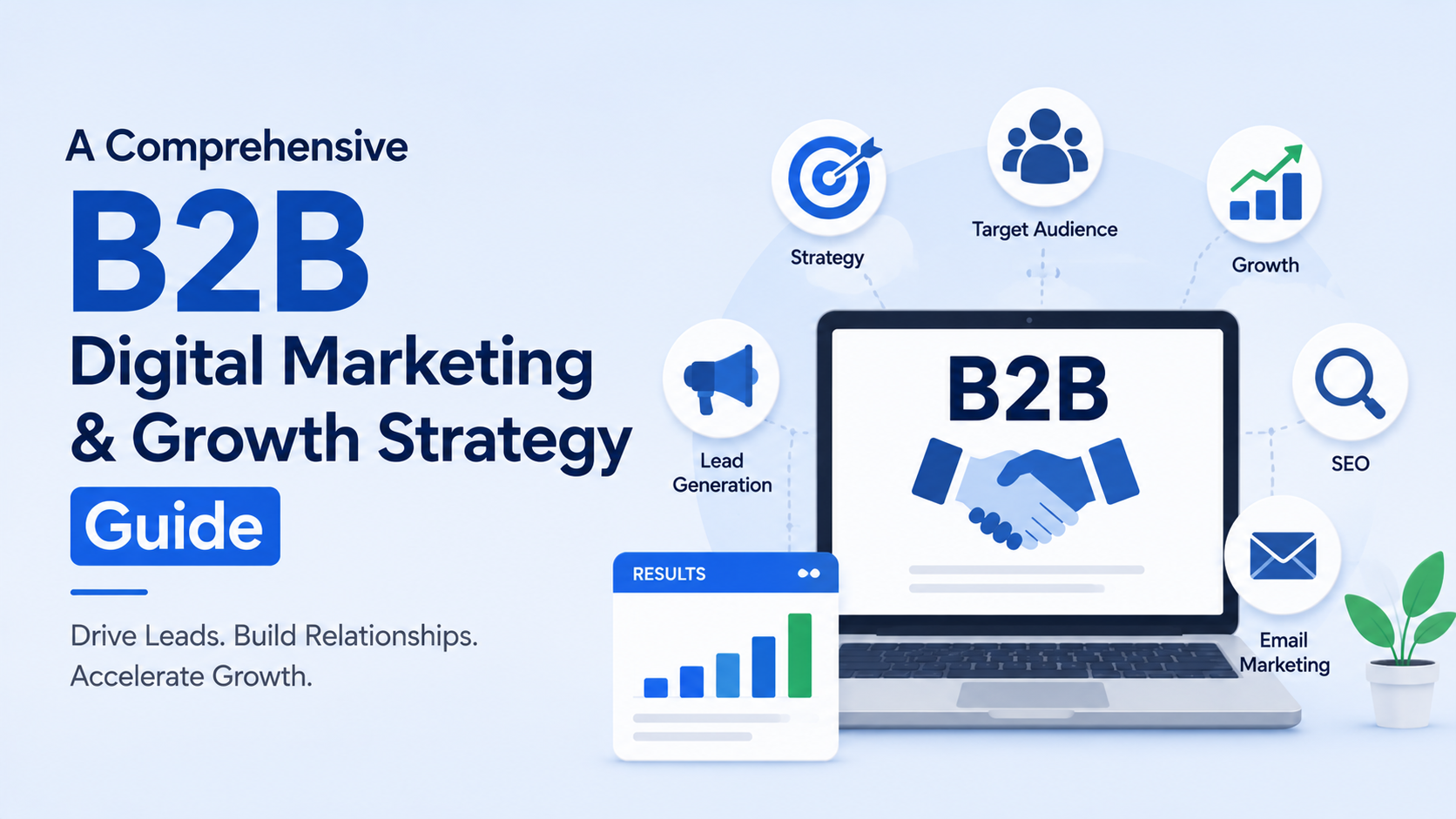
The manufacturing industry has changed significantly over the last decade. Buyers no longer depend only on trade shows, cold calls, or business directories to find suppliers. Today, procurement managers, engineers, distributors, and business owners begin their purchasing journey by searching online. Whether they need industrial machinery, precision components, packaging materials, automation equipment, or custom manufacturing services, Google is often the first place they look. This shift has made SEO for manufacturing companies one of the most valuable long-term investments for businesses looking to generate consistent B2B leads.
Unlike traditional marketing, search engine optimization helps manufacturing companies attract highly qualified prospects who are actively searching for their products or services. Instead of interrupting potential customers with advertisements, SEO positions your business where buyers are already looking for solutions. This results in better-quality leads, higher conversion rates, and lower customer acquisition costs over time.
A successful SEO strategy goes beyond simply adding keywords to a website. It combines technical optimization, keyword research, content marketing, local SEO, website performance improvements, and authority building to improve search rankings. When implemented correctly, SEO for manufacturing companies increases online visibility, strengthens brand credibility, and creates a predictable pipeline of business enquiries.
Whether you manufacture industrial equipment, automotive components, chemicals, metal fabrication products, electrical systems, or custom machinery, investing in SEO helps your business compete more effectively in today’s digital marketplace. Combined with industrial digital marketing and content marketing, SEO becomes a sustainable growth strategy that delivers measurable business results.
Why Manufacturing Companies Need SEO
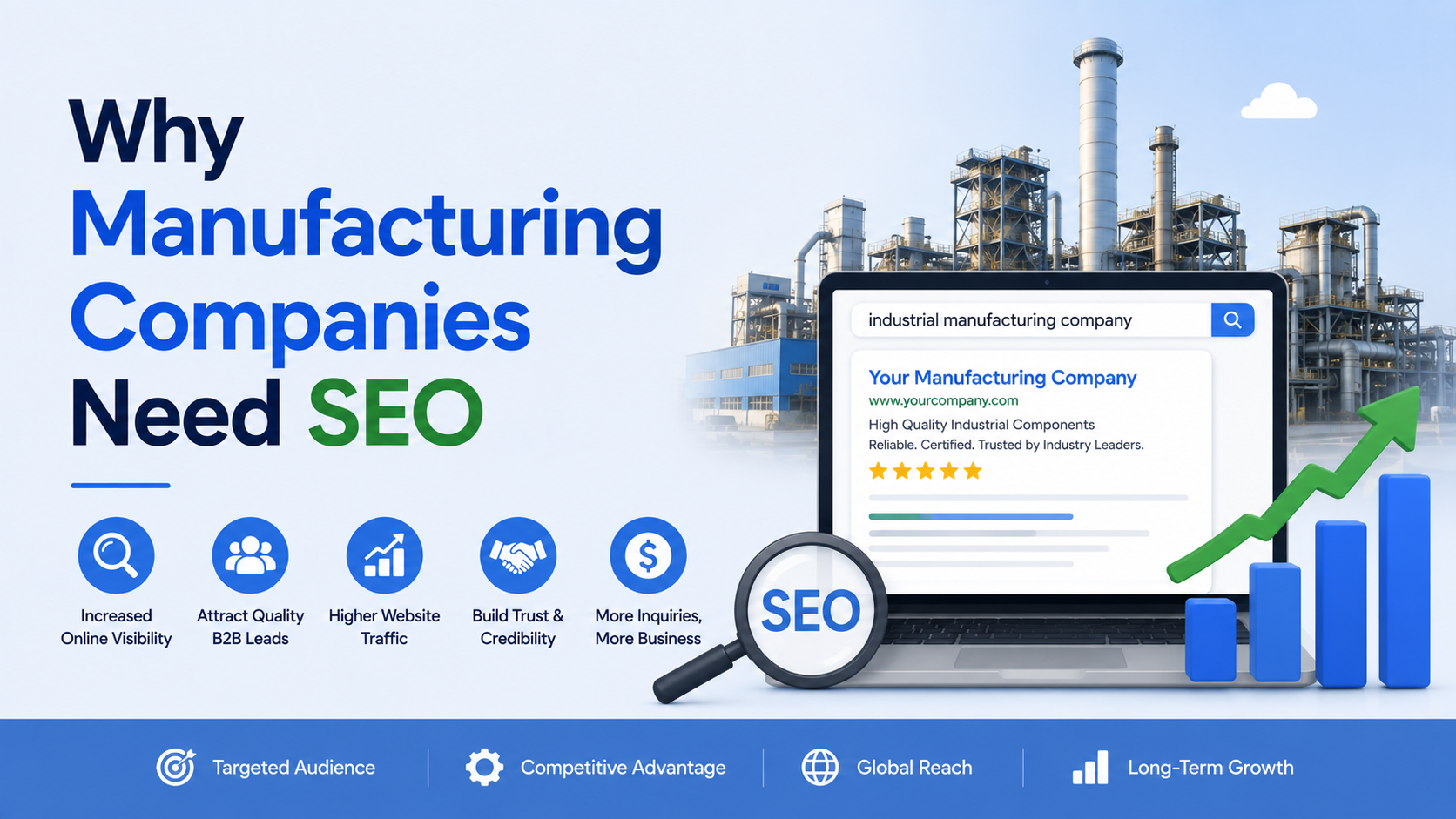
The way industrial buyers research suppliers has changed dramatically. Before contacting a manufacturer, decision-makers often spend weeks researching online. They compare suppliers, review product specifications, evaluate certifications, read case studies, and examine company websites before requesting a quotation. If your manufacturing business is not visible during this research stage, potential customers may never discover your products—even if your solutions are better than your competitors’.
One of the biggest advantages of SEO for manufacturing companies is that it attracts buyers with strong purchase intent. Unlike display advertising or cold outreach, SEO targets users who are actively searching for products, machinery, or manufacturing partners. For example, someone searching for “precision CNC machining services,” “industrial packaging manufacturer,” or “custom sheet metal fabrication company” is already looking for a supplier. Ranking for these searches places your business in front of highly qualified prospects at the right moment.
SEO also strengthens credibility. Industrial buyers typically evaluate multiple suppliers before making purchasing decisions. A professional website that ranks well on Google, contains detailed product pages, technical specifications, industry certifications, and educational resources immediately creates a stronger first impression. High search rankings often reinforce trust because buyers associate visible companies with expertise and reliability.
Another important benefit is the ability to generate leads consistently. Traditional marketing channels such as trade exhibitions, print advertising, or outbound sales campaigns can be expensive and often produce temporary results. In contrast, a well-executed SEO strategy continues attracting relevant traffic long after content has been published. As your website gains authority, it becomes a valuable business asset that generates enquiries around the clock.
Local and international visibility can also be improved through SEO. Manufacturers serving regional markets can benefit from location-based optimization, while exporters can target global buyers searching for specialized products or manufacturing capabilities. Optimizing for keywords related to industries, products, certifications, and locations increases the chances of reaching the right audience.
SEO also complements other industrial digital marketing channels. Visitors who discover your business through organic search can later be nurtured through email marketing, LinkedIn campaigns, remarketing advertisements, or downloadable technical resources. This integrated approach increases conversion rates while supporting long-term customer relationships.
The comparison below illustrates why SEO has become an essential marketing strategy for modern manufacturing businesses.
Marketing Factor | Traditional Marketing | SEO for Manufacturing Companies |
Lead Generation | Event-based and inconsistent | Continuous organic enquiries |
Buyer Intent | Broad audience | Highly targeted search traffic |
Cost Efficiency | Higher recurring costs | Long-term return on investment |
Performance Tracking | Limited | Detailed analytics and measurable KPIs |
Brand Authority | Limited visibility | Strong online credibility |
Customer Reach | Local or event-based | National and global visibility |
Content also plays a critical role in successful B2B manufacturing SEO. Publishing technical articles, buying guides, product comparisons, application notes, industry trends, maintenance guides, and manufacturing process explanations helps answer buyer questions while improving search rankings. This approach demonstrates expertise, supports Google’s EEAT principles, and positions your company as a trusted industry resource.
For example, an engineer searching for “how to choose stainless steel valves for chemical plants” may discover your educational article through Google. After reading your content, they may explore your product pages, download technical specifications, and eventually request a quotation. This illustrates how valuable content supports every stage of the B2B buying journey.
To maximise long-term success, combine manufacturing website SEO, manufacturing content marketing, and B2B SEO services into a unified strategy. You can also strengthen your website by internally linking related resources such as “Learn More About Industrial Digital Marketing,” “Explore Our Manufacturing Website Optimization Guide,” or “Read Our B2B Lead Generation Strategies.” Together, these tactics create a sustainable digital marketing system that attracts qualified prospects, increases enquiries, and helps manufacturing companies achieve consistent business growth.
Keyword Research for Industrial Businesses
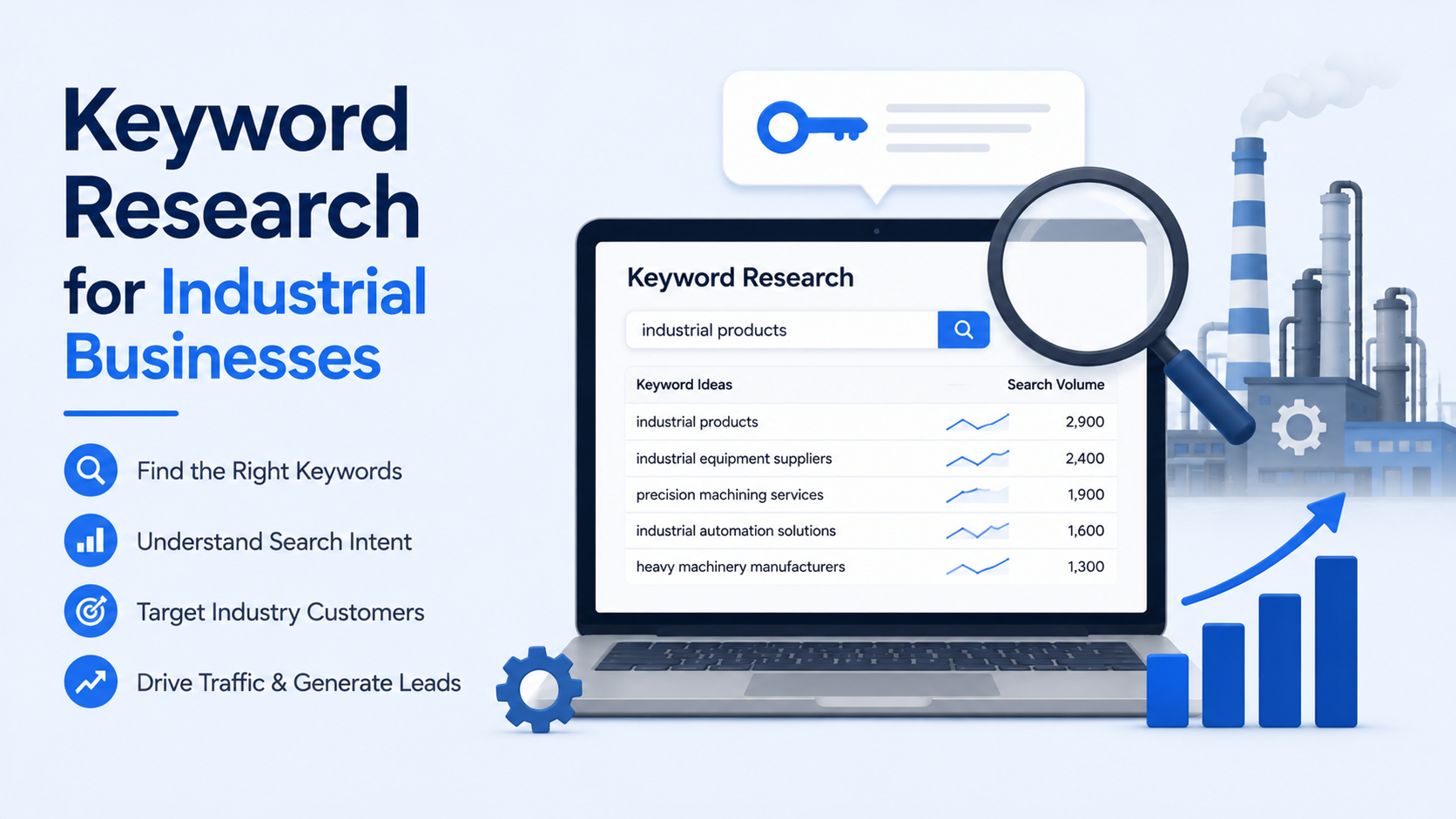
Keyword research is the foundation of every successful SEO for manufacturing companies strategy. Unlike consumer-focused businesses, manufacturers target engineers, procurement managers, distributors, architects, project consultants, and industrial buyers who use highly specific search terms. Understanding these search behaviours allows you to create content and service pages that match real customer intent.
Instead of targeting broad keywords such as “manufacturer” or “industrial company,” focus on long-tail keywords that describe your products, industries served, and applications. Examples include “custom stainless steel fabrication services,” “CNC machining manufacturer in India,” “industrial conveyor system supplier,” or “precision engineering company for automotive parts.” These keywords generally have lower competition but attract visitors with a much stronger intention to enquire or purchase.
Keyword intent is equally important. Informational keywords help attract buyers during the research stage, while commercial keywords target prospects closer to making a purchasing decision. A balanced SEO strategy should include both.
Informational Keywords
- How does CNC machining work?
- Benefits of stainless steel fabrication
- Choosing industrial automation equipment
Commercial Keywords
- CNC machining services
- Industrial valve manufacturer
- Packaging machine supplier
- Precision engineering company
Another effective strategy is organizing keywords by product categories, industries served, and customer problems. Instead of creating one generic service page, develop dedicated landing pages for each product or manufacturing capability. This improves topical relevance while making it easier for search engines to understand your expertise.
Competitor keyword analysis also provides valuable insights. Review the keywords your competitors rank for, identify content gaps, and create more comprehensive resources that better answer user questions. Rather than copying competitors, improve on their content by adding technical specifications, case studies, FAQs, downloadable brochures, and industry examples.
Local keyword optimization should not be overlooked. If your company serves specific regions, include location-based keywords such as “industrial equipment manufacturer in Ahmedabad” or “sheet metal fabrication company in Gujarat.” These searches often convert well because users are actively seeking nearby suppliers.
The table below illustrates different keyword categories for manufacturing SEO.
Keyword Type | Example | Purpose |
Informational | How CNC machining works | Attract research-stage visitors |
Commercial | CNC machining services | Generate enquiries |
Product Keywords | Stainless steel valves | Rank product pages |
Industry Keywords | Food processing equipment | Target niche industries |
Local Keywords | Manufacturer in Ahmedabad | Improve local visibility |
Once your keyword research is complete, naturally integrate these phrases into page titles, headings, meta descriptions, product descriptions, image alt text, and blog articles. Avoid keyword stuffing and instead focus on creating helpful, technically accurate content that genuinely answers customer questions.
Technical SEO Best Practices for Manufacturing Websites
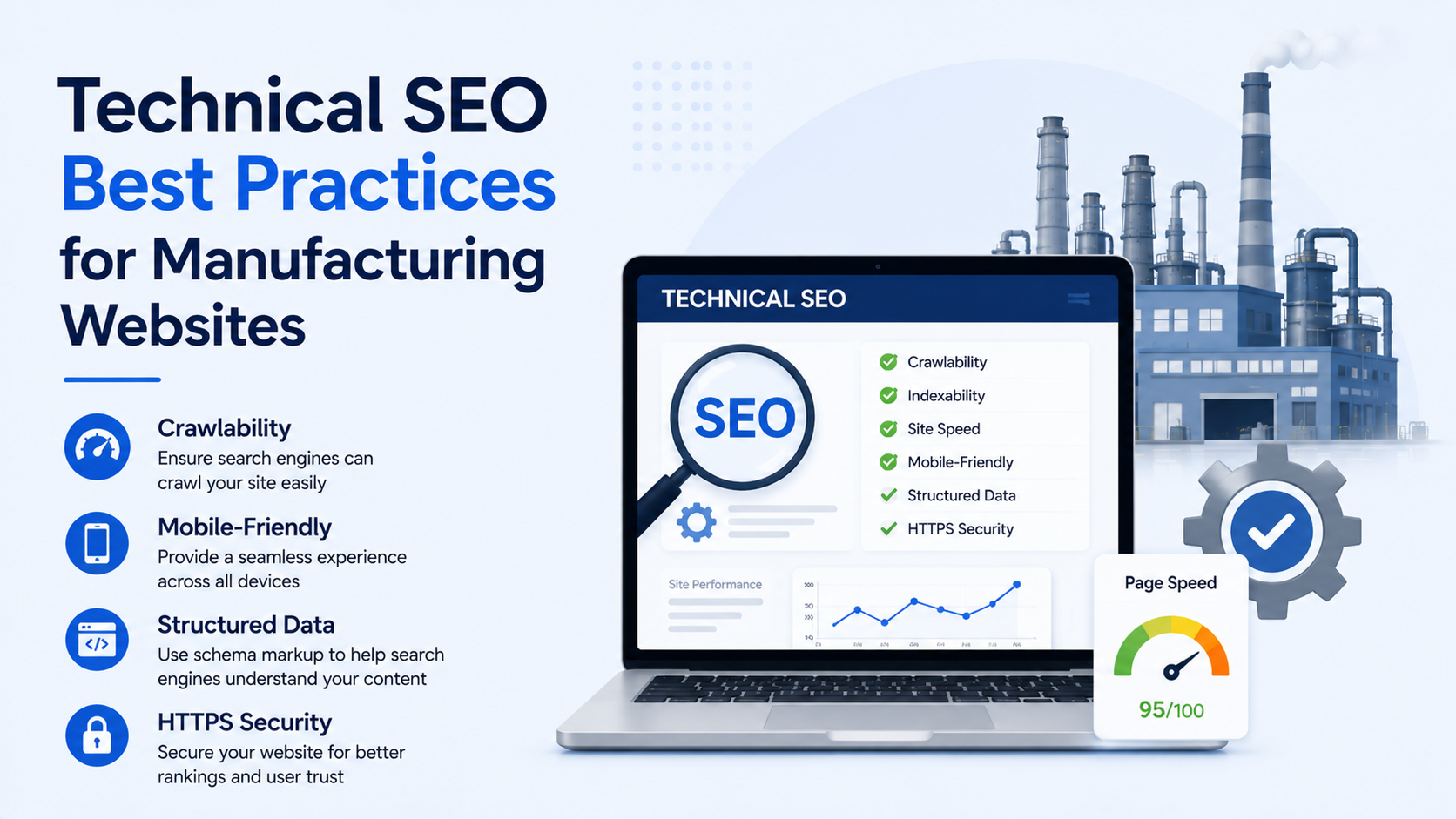
Even the best content cannot rank consistently if the website has technical issues. Technical SEO creates the foundation that allows search engines to understand your website while providing visitors with a fast, secure, and user-friendly experience. For manufacturing companies with large product catalogues and technical documentation, strong website architecture is especially important.
Website speed is one of the first areas to optimize. Industrial buyers expect websites to load quickly, especially when accessing product specifications, catalogues, or downloadable PDFs. Compress images, enable browser caching, use modern image formats, and minimize unnecessary scripts to improve loading times. Faster websites not only improve user experience but also contribute to better search rankings.
Mobile optimization is equally essential. Many procurement professionals and engineers research suppliers using smartphones or tablets while travelling or visiting project sites. A responsive website ensures product pages, enquiry forms, and technical documents display correctly across all devices.
Clear website architecture also improves SEO and Google Ads performance. Organize your navigation into logical categories such as Products, Industries Served, Services, Resources, About Us, and Contact. Product pages should be grouped by category and linked internally to related services, case studies, and blog articles. This structure enhances landing page relevance, improves user experience for Google Ads campaigns, and helps both users and search engines discover relevant content more efficiently.
Structured data (Schema Markup) provides additional information to search engines about your business, products, reviews, FAQs, and contact details. Implementing schema can improve how your pages appear in search results and increase click-through rates.
Security is another critical ranking factor. Every manufacturing website should use HTTPS encryption to protect visitor information and build trust. Regularly updating your website, fixing broken links, and monitoring crawl errors through Google Search Console helps maintain technical health.
Core Web Vitals also play an important role in modern SEO. Google evaluates factors such as loading performance, visual stability, and interactivity when determining user experience. Optimizing these metrics improves both rankings and visitor satisfaction.
Technical SEO Checklist
Technical SEO Task | Business Benefit |
Improve Website Speed | Better rankings and user experience |
Mobile-Friendly Design | Higher engagement across devices |
HTTPS Security | Builds trust and improves SEO |
XML Sitemap | Faster search engine indexing |
Schema Markup | Enhanced search result appearance |
Internal Linking | Better navigation and crawlability |
Fix Broken Links | Improved website health |
Optimize Core Web Vitals | Stronger user experience and rankings |
Technical SEO should be reviewed regularly rather than treated as a one-time task. Monthly website audits help identify crawl issues, duplicate content, indexing errors, and performance bottlenecks before they affect search rankings.
For maximum results, combine technical optimization with manufacturing content marketing, B2B manufacturing SEO, and high-quality product pages. You can strengthen your internal linking strategy by guiding visitors to related resources such as “Learn More About Manufacturing Content Marketing,” “Explore Our Industrial Digital Marketing Guide,” or “Read Our B2B SEO Services Checklist.” Together, these best practices create a technically sound website that supports long-term organic growth, improves lead quality, and enhances the overall customer experience.
Important SEO Metrics for Manufacturing Businesses
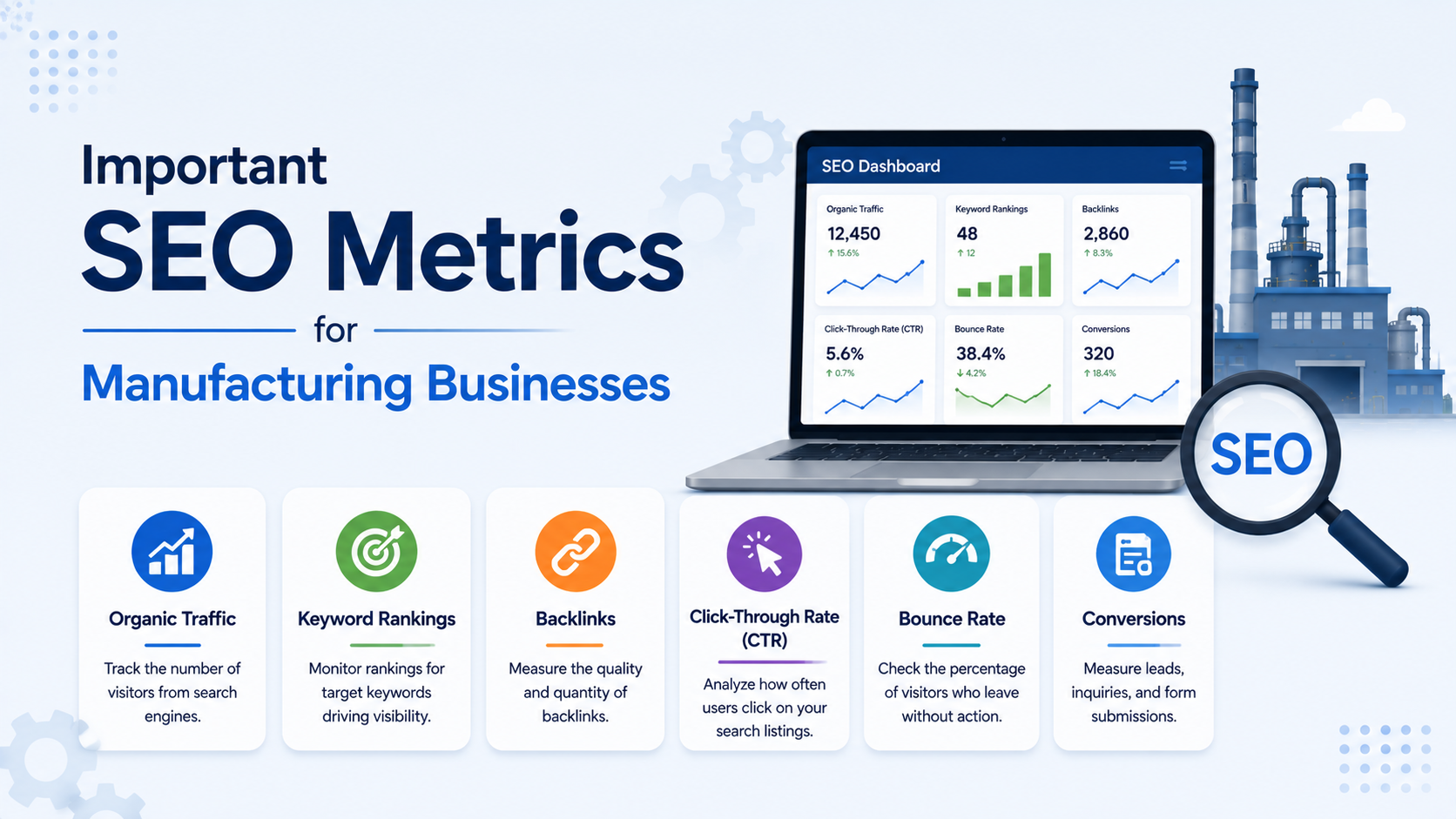
SEO Metric | Why It Matters |
Organic Traffic | Measures search visibility |
Keyword Rankings | Tracks SEO progress |
Qualified Leads | Indicates lead generation success |
Conversion Rate | Measures enquiry performance |
Bounce Rate | Evaluates content relevance |
Average Session Duration | Shows user engagement |
ROI | Demonstrates business impact |
Review these metrics monthly and compare them against your business goals. Use the insights to improve content, optimise product pages, strengthen technical SEO, and refine your keyword strategy. Continuous improvement is what transforms SEO from a marketing tactic into a reliable lead generation engine.
SEO for manufacturing companies has become an essential growth strategy in today’s competitive B2B marketplace. As industrial buyers increasingly rely on Google to research suppliers, compare products, and evaluate manufacturing capabilities, businesses with a strong online presence gain a significant competitive advantage.
From conducting in-depth keyword research and implementing technical SEO best practices to creating valuable content, integrating performance marketing strategies, and measuring campaign performance, every element of an effective digital marketing strategy contributes to attracting qualified prospects and generating long-term business opportunities. Unlike short-term advertising campaigns alone, the combination of SEO and performance marketing delivers sustained value by increasing organic visibility, driving targeted traffic, strengthening brand authority, and building trust with potential customers throughout the buying journey..
The most successful manufacturers combine manufacturing website SEO, industrial digital marketing, and manufacturing content marketing to create a complete digital ecosystem that consistently generates high-quality B2B leads. By focusing on user intent, technical excellence, and helpful content, manufacturing companies can improve search rankings, reduce dependence on traditional marketing methods, and achieve sustainable business growth.
If your goal is to increase qualified enquiries, strengthen your online presence, and outperform competitors in search results, now is the ideal time to invest in a comprehensive SEO for manufacturing companies strategy. A well-executed SEO plan will help your business attract the right audience, convert more visitors into customers, and build a scalable source of long-term revenue.
FAQ
Key technical SEO practices include improving website speed, ensuring mobile responsiveness, using HTTPS, implementing schema markup, fixing broken links, optimizing Core Web Vitals, and maintaining a clear site structure. These improvements enhance user experience and search engine rankings.
Manufacturers can measure SEO success by tracking organic traffic, keyword rankings, qualified leads, conversion rates, bounce rate, average session duration, and overall ROI. Monitoring these metrics regularly helps optimize SEO performance and improve lead generation.
SEO helps manufacturing companies improve their online visibility, attract qualified B2B buyers, generate consistent enquiries, and build industry credibility. By ranking higher on Google for relevant products and services, manufacturers can create a long-term source of high-quality leads.
Keyword research helps manufacturers identify the search terms used by engineers, procurement managers, and industrial buyers. Targeting relevant, high-intent keywords improves search rankings, attracts qualified traffic, and increases the chances of generating business enquiries
служба в москве по контракту бпла – рассмотрите возможность поступления на бпла службу по контракту в Москве и узнайте о требованиях, выплатах и карьерных перспективах операторов дронов.
Курсы охватывают вопросы летно-технической эксплуатации, обслуживания бортового оборудования и взаимодействия с наземными службами.