Blog

Your blog category

SEO for manufacturing companies to generate high-quality B2B leads through keyword research, on-page SEO, technical SEO, and content marketing

SEO for Manufacturing Companies: A Complete Guide to Generating High-Quality B2B Leads

A Comprehensive B2B Digital Marketing & Growth Strategy Guide The manufacturing industry has changed significantly over the last decade. Buyers no longer depend only on trade shows, cold calls, or business directories to find suppliers. Today, procurement managers, engineers, distributors, and business owners begin their purchasing journey by searching online. Whether they need industrial machinery, precision components, packaging materials, automation equipment, or custom manufacturing services, Google is often the first place they look. This shift has made SEO for manufacturing companies one of the most valuable long-term investments for businesses looking to generate consistent B2B leads. Unlike traditional marketing, search engine optimization helps manufacturing companies attract highly qualified prospects who are actively searching for their products or services. Instead of interrupting potential customers with advertisements, SEO positions your business where buyers are already looking for solutions. This results in better-quality leads, higher conversion rates, and lower customer acquisition costs over time. A successful SEO strategy goes beyond simply adding keywords to a website. It combines technical optimization, keyword research, content marketing, local SEO, website performance improvements, and authority building to improve search rankings. When implemented correctly, SEO for manufacturing companies increases online visibility, strengthens brand credibility, and creates a predictable pipeline of business enquiries. Whether you manufacture industrial equipment, automotive components, chemicals, metal fabrication products, electrical systems, or custom machinery, investing in SEO helps your business compete more effectively in today’s digital marketplace. Combined with industrial digital marketing and content marketing, SEO becomes a sustainable growth strategy that delivers measurable business results. Why Manufacturing Companies Need SEO The way industrial buyers research suppliers has changed dramatically. Before contacting a manufacturer, decision-makers often spend weeks researching online. They compare suppliers, review product specifications, evaluate certifications, read case studies, and examine company websites before requesting a quotation. If your manufacturing business is not visible during this research stage, potential customers may never discover your products—even if your solutions are better than your competitors’. One of the biggest advantages of SEO for manufacturing companies is that it attracts buyers with strong purchase intent. Unlike display advertising or cold outreach, SEO targets users who are actively searching for products, machinery, or manufacturing partners. For example, someone searching for “precision CNC machining services,” “industrial packaging manufacturer,” or “custom sheet metal fabrication company” is already looking for a supplier. Ranking for these searches places your business in front of highly qualified prospects at the right moment. SEO also strengthens credibility. Industrial buyers typically evaluate multiple suppliers before making purchasing decisions. A professional website that ranks well on Google, contains detailed product pages, technical specifications, industry certifications, and educational resources immediately creates a stronger first impression. High search rankings often reinforce trust because buyers associate visible companies with expertise and reliability. Another important benefit is the ability to generate leads consistently. Traditional marketing channels such as trade exhibitions, print advertising, or outbound sales campaigns can be expensive and often produce temporary results. In contrast, a well-executed SEO strategy continues attracting relevant traffic long after content has been published. As your website gains authority, it becomes a valuable business asset that generates enquiries around the clock. Local and international visibility can also be improved through SEO. Manufacturers serving regional markets can benefit from location-based optimization, while exporters can target global buyers searching for specialized products or manufacturing capabilities. Optimizing for keywords related to industries, products, certifications, and locations increases the chances of reaching the right audience. SEO also complements other industrial digital marketing channels. Visitors who discover your business through organic search can later be nurtured through email marketing, LinkedIn campaigns, remarketing advertisements, or downloadable technical resources. This integrated approach increases conversion rates while supporting long-term customer relationships. The comparison below illustrates why SEO has become an essential marketing strategy for modern manufacturing businesses. Marketing Factor Traditional Marketing SEO for Manufacturing Companies Lead Generation Event-based and inconsistent Continuous organic enquiries Buyer Intent Broad audience Highly targeted search traffic Cost Efficiency Higher recurring costs Long-term return on investment Performance Tracking Limited Detailed analytics and measurable KPIs Brand Authority Limited visibility Strong online credibility Customer Reach Local or event-based National and global visibility   Content also plays a critical role in successful B2B manufacturing SEO. Publishing technical articles, buying guides, product comparisons, application notes, industry trends, maintenance guides, and manufacturing process explanations helps answer buyer questions while improving search rankings. This approach demonstrates expertise, supports Google’s EEAT principles, and positions your company as a trusted industry resource. For example, an engineer searching for “how to choose stainless steel valves for chemical plants” may discover your educational article through Google. After reading your content, they may explore your product pages, download technical specifications, and eventually request a quotation. This illustrates how valuable content supports every stage of the B2B buying journey. To maximise long-term success, combine manufacturing website SEO, manufacturing content marketing, and B2B SEO services into a unified strategy. You can also strengthen your website by internally linking related resources such as “Learn More About Industrial Digital Marketing,” “Explore Our Manufacturing Website Optimization Guide,” or “Read Our B2B Lead Generation Strategies.” Together, these tactics create a sustainable digital marketing system that attracts qualified prospects, increases enquiries, and helps manufacturing companies achieve consistent business growth. Keyword Research for Industrial Businesses Keyword research is the foundation of every successful SEO for manufacturing companies strategy. Unlike consumer-focused businesses, manufacturers target engineers, procurement managers, distributors, architects, project consultants, and industrial buyers who use highly specific search terms. Understanding these search behaviours allows you to create content and service pages that match real customer intent. Instead of targeting broad keywords such as “manufacturer” or “industrial company,” focus on long-tail keywords that describe your products, industries served, and applications. Examples include “custom stainless steel fabrication services,” “CNC machining manufacturer in India,” “industrial conveyor system supplier,” or “precision engineering company for automotive parts.” These keywords generally have lower competition but attract visitors with a much stronger intention to enquire or purchase. Keyword intent is equally important. Informational keywords help attract buyers during the research stage, while

SEO for Manufacturing Companies: A Complete Guide to Generating High-Quality B2B Leads Read More »
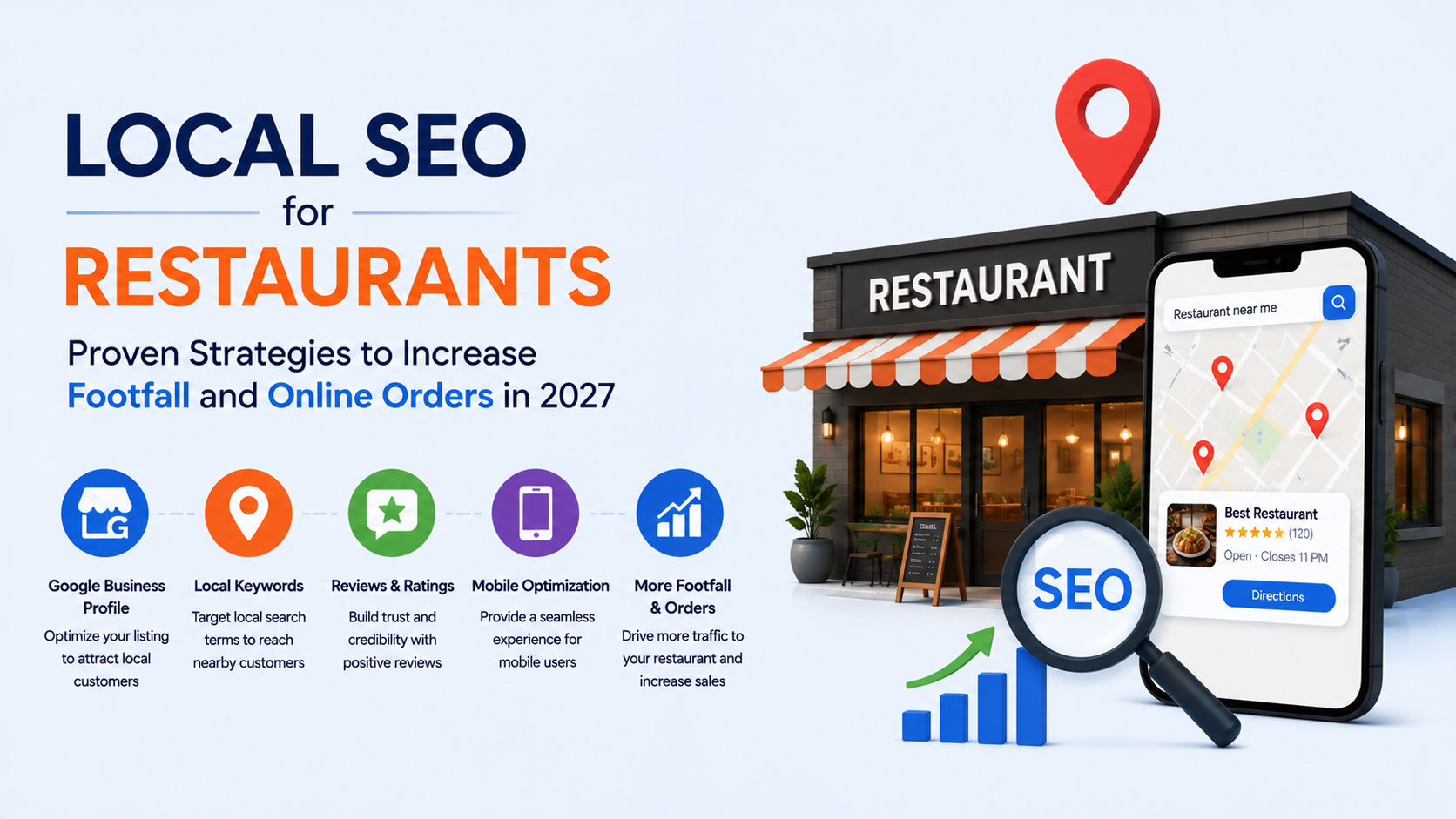
Local SEO for restaurants to increase footfall and online orders using Google Business Profile, local keywords, reviews, and mobile optimization.

⁠Local SEO for Restaurants: Proven Strategies to Increase Footfall and Online Orders in 2027

Today, most people discover restaurants through Google before deciding where to eat or place an online order. Whether they search for “best restaurant near me,” “family restaurant in Ahmedabad,” or “pizza delivery nearby,” Google displays local businesses that match their search intent. This shift in customer behavior has made local SEO for restaurants one of the most important digital marketing strategies for restaurants of every size. Unlike traditional advertising, local SEO helps restaurants appear in front of customers who are actively looking for a place to dine or order food. By optimizing your website, Google Business Profile, local listings, and online reputation, your restaurant can attract highly qualified local customers without relying entirely on paid advertising. A successful local SEO strategy goes beyond simply adding your restaurant’s name to Google. It includes optimizing your Google Business Profile, improving your restaurant website, targeting location-based keywords, earning positive customer reviews, building local citations, creating valuable content, running targeted Google Ads campaigns, and ensuring consistent business information across all online platforms. Together, these efforts improve your visibility in Google Search, Google Maps, local search results, and paid search results, helping you attract more local customers. Whether you own a café, fine-dining restaurant, cloud kitchen, fast-food outlet, bakery, or multi-location restaurant chain, investing in local SEO for restaurants helps increase foot traffic, online reservations, takeaway orders, and food delivery enquiries. Combined with strong restaurant digital marketing strategies, local SEO creates a sustainable system for attracting customers and growing your restaurant business throughout 2026 and beyond Why Local SEO Is Critical for Restaurants The restaurant industry has become increasingly competitive, and customer behavior has changed dramatically. Instead of driving around looking for a place to eat, most people now use smartphones to search for nearby restaurants, compare menus, read reviews, check photos, and view opening hours before making a decision. If your restaurant does not appear prominently in local search results, you risk losing potential customers to competitors who have invested in local SEO. One of the biggest advantages of local SEO for restaurants is that it connects your business with customers who already have strong purchase intent. Someone searching for “best café near me,” “vegetarian restaurant nearby,” or “late-night food delivery” is usually ready to visit a restaurant or place an order. Appearing in these search results significantly increases your chances of converting that search into a paying customer. Local SEO also helps build trust. Restaurants with complete Google Business Profiles, accurate contact information, high-quality food images, updated menus, and numerous positive reviews often receive more clicks than businesses with incomplete or outdated listings. Customers naturally prefer restaurants that appear professional, transparent, and highly rated. Another major benefit is increased visibility on Google Maps. Many users rely on Google Maps to find restaurants while travelling, commuting, or exploring a new neighbourhood. Ranking in the Google Maps Local Pack can dramatically increase calls, direction requests, reservations, and walk-in traffic. This is why how to rank restaurant on Google Maps has become one of the most important goals for restaurant owners. Unlike traditional advertising, local SEO provides long-term value. While newspaper advertisements, flyers, and radio campaigns stop producing results once the campaign ends, SEO continues attracting local customers over time. Regularly updating your website, publishing location-based content, and maintaining your online profiles strengthens your visibility and improves search rankings. The comparison below highlights why local SEO has become a smarter investment than many traditional marketing methods. Marketing Factor Traditional Advertising Local SEO for Restaurants Audience Targeting Broad and general Customers actively searching nearby Cost Efficiency High recurring costs Long-term return on investment Visibility Limited campaign duration Continuous online presence Customer Intent Mixed audience High purchase intent Performance Tracking Limited Detailed analytics available Trust Building Minimal Reviews, ratings, and business profile Another key advantage of local SEO is that it complements other restaurant digital marketing strategies. Customers may first discover your restaurant through Google Search, then visit your website, browse your menu, check Instagram photos, read customer reviews, and finally place an order online. Every digital touchpoint contributes to building confidence and encouraging action. Local SEO also supports voice search, which continues to grow as more people use digital assistants. Searches like “Where’s the best Italian restaurant near me?” or “Which restaurant is open now?” are increasingly common. Optimizing your website and Google Business Profile with natural language, location-based keywords, and accurate business information improves your chances of appearing in these voice search results. To maximise results, combine local SEO for restaurants with Google Business Profile for restaurants, restaurant SEO services, social media marketing, and a fast, mobile-friendly website. You can also strengthen your internal linking strategy with anchor texts such as “Learn More About Restaurant Website SEO,” “Explore Restaurant Digital Marketing Strategies,” or “Read Our Guide to Increasing Restaurant Online Orders.” Together, these strategies create a complete digital marketing system that helps your restaurant attract more local customers, increase revenue, and build long-term brand loyalty. Optimizing Google Business Profile for More Visibility Your Google Business Profile (formerly Google My Business) is one of the most valuable tools for local SEO for restaurants. It often appears before your website in search results, making it the first impression potential customers have of your business. A complete and optimized profile can significantly improve your local rankings while encouraging more people to visit your restaurant or place an online order. Start by claiming and verifying your business profile. Ensure your restaurant’s Name, Address, and Phone Number (NAP) are accurate and consistent across your website, social media accounts, and online directories. Inconsistent information can confuse both customers and search engines, negatively affecting your local rankings. Select the most relevant business categories. Your primary category should accurately describe your restaurant, such as “Indian Restaurant,” “Pizza Restaurant,” “Chinese Restaurant,” or “Cafe.” You can also add secondary categories that reflect additional services like takeaway, food delivery, catering, or breakfast restaurant. High-quality images play a major role in attracting customers. Upload professional photos of your restaurant’s interior, exterior, dining area, signature dishes, beverages, kitchen,

⁠Local SEO for Restaurants: Proven Strategies to Increase Footfall and Online Orders in 2027 Read More »

Social media marketing for gyms to increase memberships, boost engagement, and grow a fitness brand using targeted digital marketing strategies.

Social Media Marketing for Gyms: Effective Strategies to Increase Memberships and Engagement

Social Media Marketing for Gyms Social media has transformed how people discover, evaluate, and choose a gym. Before visiting a fitness center, most potential members check its Instagram, Facebook, or Google profile to see the facilities, trainers, reviews, and overall community. This shift in consumer behavior has made social media marketing for gyms one of the most powerful tools for attracting new members and building long-term customer relationships. Unlike traditional advertising, social media allows gyms to connect with their audience daily. From sharing workout tips and transformation stories to promoting membership offers and fitness events, every post creates an opportunity to engage with potential customers. Whether you own a local fitness studio, a CrossFit box, a yoga center, or a premium health club, having a consistent social media strategy helps your business remain visible and competitive. Effective social media marketing for gyms is not just about posting attractive images. It involves understanding your target audience, creating valuable content, responding to comments and messages, running targeted advertising campaigns, and measuring performance regularly. When these activities work together, they create a steady flow of leads and improve member retention. Today’s successful gyms also combine social media with other fitness marketing strategies, such as local SEO, Google Business Profile optimization, email marketing, and content marketing. This integrated approach ensures potential customers find your business at every stage of their fitness journey. If your goal is to increase memberships, strengthen your brand, and build a loyal fitness community, investing in the right gym digital marketing ideas can deliver measurable and sustainable growth. Why Social Media Is Essential for Modern The way people choose a gym has changed dramatically over the last few years. Instead of visiting multiple fitness centers, they often compare gyms online before making a decision. They browse Instagram Reels, Facebook pages, Google reviews, and member testimonials to determine whether a gym matches their expectations. This makes your social media presence an extension of your brand and often creates the first impression for potential members. A professionally managed social media profile demonstrates that your gym is active, trustworthy, and committed to helping members achieve their fitness goals. Regularly posting workout videos, trainer introductions, nutrition tips, client transformations, and success stories allows potential customers to see the value your gym provides before they ever step through the door. Another major benefit of social media marketing for gyms is the ability to build meaningful relationships. Unlike traditional advertising, social media creates two-way communication. Members can ask questions, leave comments, participate in polls, and interact with trainers in real time. These interactions build familiarity and trust, making people more comfortable choosing your gym over competitors. Local targeting is another reason social media has become indispensable for gym owners. Platforms such as Facebook and Instagram allow businesses to reach users within specific cities or neighborhoods based on their interests, age, fitness goals, and online behavior. Instead of advertising to everyone, gyms can focus their budget on people who are most likely to purchase a membership. For example, a newly opened fitness center in Ahmedabad can target users between 18 and 45 years old who are interested in weight loss, bodybuilding, CrossFit, yoga, personal training, or healthy living. This targeted approach significantly improves the quality of leads compared to traditional advertising methods. Social media also supports every stage of the customer journey. A potential member may first discover your gym through an Instagram Reel, then visit your website, read customer reviews, watch transformation videos, and finally contact your team through direct messages or WhatsApp. Every piece of content helps move that individual closer to becoming a paying member. Consistency plays a vital role in success. Posting high-quality content several times a week keeps your gym visible in followers’ feeds and reminds existing members to stay engaged. Over time, this consistent presence strengthens brand recognition and increases the likelihood that people will recommend your gym to friends and family. One of the greatest advantages of social media is that results are measurable. Gym owners can track reach, engagement, website clicks, lead forms, and membership enquiries. These insights help identify which content performs best and where marketing budgets should be invested for maximum return. The following table highlights how social media compares with traditional gym marketing methods: Marketing Method Traditional Advertising Social Media Marketing Audience Targeting Broad Highly specific and location-based Customer Interaction One-way communication Real-time engagement Cost Usually higher Flexible for every budget Performance Tracking Limited Detailed analytics available Brand Building Slow Continuous and relationship-driven Lead Generation Moderate High when managed strategically Successful gyms understand that social media is not simply a promotional tool—it is a platform for education, motivation, and community building. Sharing valuable content consistently positions your business as a trusted fitness authority while encouraging potential members to take the next step. To maximize results, combine your social media efforts with gym lead generation strategies, Facebook Ads for gyms, and a search engine optimized website. You can also strengthen your online presence by learning more about local SEO for fitness businesses, Google Business Profile optimization, and content marketing for gyms. Together, these digital marketing channels create a sustainable system for attracting new members and retaining existing ones. Best Content Ideas to Increase Engagement One of the biggest mistakes gym owners make is treating social media like a digital billboard. Posting only discounts, membership offers, or promotional graphics often leads to lower engagement because followers quickly lose interest. Instead, successful gyms create content that solves problems, answers common fitness questions, and motivates people to stay consistent with their health goals. This approach naturally increases reach while strengthening your brand reputation. Educational content should form the foundation of your social media strategy. Short workout demonstrations, proper exercise techniques, stretching routines, injury prevention tips, and nutrition guidance position your gym as a trusted source of fitness knowledge. Videos explaining common mistakes during squats, deadlifts, or push-ups often receive high engagement because they provide immediate value to viewers. Member transformation stories are another powerful content category. Sharing before-and-after photos,

Social Media Marketing for Gyms: Effective Strategies to Increase Memberships and Engagement Read More »

Digital marketing for interior designers to attract high-value clients using SEO, social media marketing, portfolio optimization, and online branding.

Digital Marketing for Interior Designers: How to Attract High-Value Clients and Grow Your Brand

Digital Marketing for Interior Designers Interior design is a highly visual and competitive industry where first impressions matter. While referrals and word-of-mouth marketing remain valuable, they are no longer enough to sustain consistent business growth. Today, most homeowners, property developers, and commercial clients begin their search for an interior designer online. They browse Google, Instagram, Pinterest, and design websites to compare portfolios, read reviews, and evaluate expertise before making contact. This shift in customer behaviour has made digital marketing for interior designers one of the most important investments for growing a successful design business. An effective digital marketing strategy helps interior designers showcase their creativity, establish credibility, and generate high-quality enquiries from clients actively looking for design services. Whether you specialise in residential interiors, luxury homes, office spaces, retail outlets, or hospitality projects, having a strong online presence ensures your brand remains visible throughout the client’s decision-making journey. However, successful digital marketing for interior designers is much more than posting beautiful project photos on social media. It combines search engine optimization (SEO), content marketing, social media marketing, paid advertising, local SEO, email marketing, and website optimization into one integrated strategy. Together, these channels help attract the right audience, nurture trust, and convert visitors into paying clients. As competition continues to grow, businesses that invest in professional digital marketing gain a significant advantage over those relying only on traditional advertising. From ranking higher on Google to generating consistent enquiries through social media, digital marketing enables interior designers to build authority, reach their ideal clients, and achieve sustainable business growth Why Digital Marketing Is Essential for Interior Designers The way people hire interior designers has changed dramatically over the past decade. Instead of relying solely on referrals or newspaper advertisements, clients now research extensively online before contacting a designer. They compare portfolios, browse social media profiles, read Google reviews, and visit multiple websites before deciding whom to trust with their project. If your business isn’t visible during this research process, you’re likely losing valuable opportunities to competitors with stronger digital marketing strategies. One of the biggest advantages of digital marketing for interior designers is its ability to showcase your expertise 24/7. Your website, Instagram profile, Pinterest boards, blog articles, and Google Business Profile work together to present your design style, completed projects, client testimonials, and industry knowledge—even while you’re meeting clients or managing ongoing projects. A professionally managed online presence also helps build trust before the first conversation. High-quality project photography, detailed case studies, positive customer reviews, and educational content reassure potential clients that they are choosing an experienced professional. Trust is especially important in the interior design industry because clients are investing significant time and money into transforming their homes or commercial spaces. Digital marketing also allows interior designers to target specific audiences more effectively than traditional advertising. Using tools like Google Ads and Meta Ads, you can reach homeowners planning renovations, newly married couples furnishing a new house, real estate investors, architects, builders, and business owners looking to redesign their offices. This targeted approach improves lead quality while making better use of your marketing budget. Local visibility is another major benefit. Most interior designers serve clients within a particular city or region. By implementing local SEO for interior designers, optimizing your Google Business Profile, and creating location-specific landing pages, you can appear in Google searches such as “interior designer near me” or “best interior designer in Ahmedabad.” These local searches often have strong purchase intent, making them an excellent source of qualified enquiries. Digital marketing also provides measurable results. Unlike traditional marketing methods where success is difficult to track, digital platforms allow you to monitor website traffic, keyword rankings, enquiry forms, phone calls, advertising performance, and conversion rates. These insights help you understand which marketing strategies for interior design business are delivering the highest return on investment and where improvements can be made. The comparison below highlights why digital marketing has become a preferred choice for modern interior design businesses. Marketing Factor Traditional Marketing Digital Marketing Audience Targeting Broad and less specific Highly targeted by location, interests, and demographics Cost Efficiency Often expensive Flexible for businesses of all sizes Performance Tracking Limited Real-time analytics and measurable ROI Brand Visibility Short-term Continuous online presence Lead Generation Moderate Consistent and scalable Customer Engagement One-way communication Interactive through websites and social media   Another significant advantage is content marketing. Publishing blogs about home renovation trends, space-saving ideas, colour psychology, modular kitchens, luxury living room designs, or sustainable interiors positions your business as an industry expert. Educational content not only attracts organic traffic through SEO for interior designers but also builds authority and trust with potential clients. For example, a homeowner searching for “best living room lighting ideas” may discover your blog, explore your portfolio, and eventually enquire about your interior design services. This demonstrates how valuable content supports every stage of the customer journey—from awareness to conversion. To maximise results, combine your digital marketing efforts with interior design website marketing, search engine optimization, and social media marketing for interior designers. You can also strengthen your online presence by creating detailed project case studies, publishing customer testimonials, and regularly updating your Google Business Profile. Together, these strategies create a sustainable marketing system that consistently attracts high-value clients and helps your interior design business stand out in an increasingly competitive market. SEO Strategies to Rank Higher on Google When someone searches for terms like “best interior designer near me,” “luxury home interior designer,” or “office interior designer in Ahmedabad,” Google displays businesses it considers the most relevant and trustworthy. If your website is optimized correctly, you have a greater chance of appearing on the first page, where most users click. Ranking well means your business gets discovered by people who already have an interest in hiring an interior designer, making SEO one of the highest-return digital marketing investments. The first step in successful SEO for interior designers is keyword research. Instead of targeting only broad keywords like “interior designer,” focus on long-tail search terms

Digital Marketing for Interior Designers: How to Attract High-Value Clients and Grow Your Brand Read More »

SEO for doctors and clinics to increase online visibility, attract more patients, improve Google rankings, and grow healthcare practices.

SEO for Doctors & Clinics: How Healthcare Professionals Can Get More Patients Online

Introduction When people need a doctor, dentist, specialist, or medical clinic, one of the first places they turn to is Google. Patients may search for terms such as “doctor near me,” “best dermatologist in Ahmedabad,” “dentist in Ahmedabad,” or a specific treatment they need. If your clinic does not appear prominently in these searches, potential patients may choose another healthcare provider that is easier to find online. This is where SEO for doctors becomes an important part of modern patient acquisition. Medical SEO is not simply about ranking a website for more keywords. It is about helping the right patients discover accurate information, understand your expertise, find your clinic, and take the next step toward an appointment. A successful strategy combines local SEO, Google Business Profile optimization, healthcare website SEO, useful medical content, technical performance, and strong trust signals. For doctors and clinics, search visibility can influence more than website traffic. A well-optimized online presence can help increase relevant enquiries, phone calls, direction requests, appointment bookings, and awareness within the local community. Whether you run a single-doctor practice, dental clinic, specialty center, hospital department, or multi-location healthcare organization, medical practice SEO can provide a sustainable way to build online visibility. This guide explains practical SEO strategies for doctors and clinics, including local search optimization, Google Business Profile management, medical website best practices, and common mistakes to avoid. Why SEO Matters for Doctors and Clinics SEO for doctors helps medical professionals become visible when potential patients search Google for a doctor, specialist, treatment, or clinic in their area. Unlike traditional advertising, SEO can connect your practice with people who are already looking for healthcare information or trying to book an appointment. A strong strategy combines useful medical content, local search optimization, a trustworthy website, and an accurate Google Business Profile. Healthcare is also different from many other industries because medical websites fall into a high-trust category. Patients want to know who is treating them, what services are available, where the clinic is located, and whether the information they read is credible. This makes expertise, accurate information, transparent doctor profiles, and clear sources particularly important. Research into health-related search results also suggests that perceived expertise and trust strongly influence how people evaluate medical content. (arXiv) For example, a dermatologist in Ahmedabad could target searches such as “dermatologist in Ahmedabad,” “skin specialist near me,” or “acne treatment in Ahmedabad.” A dentist could build dedicated pages around “dentist near me,” “root canal treatment,” or “dental implants in Ahmedabad.” The objective is not simply to increase website traffic. It is to attract relevant visitors who can become calls, appointment enquiries, direction requests, or consultations. Effective medical practice SEO therefore connects three things: visibility, credibility, and conversion. Your website may rank well, but if patients cannot easily find your phone number, location, appointment process, qualifications, or services, rankings alone will not create meaningful growth. A useful internal linking opportunity here is to connect this section with pages such as “local SEO services,” “Google Business Profile optimization,” and “SEO for healthcare websites.” Local SEO Strategies to Attract Nearby Patients Local SEO for doctors focuses on making your practice visible to people searching for healthcare services in a specific location. Local SEO helps doctors appear in Google Search and Maps when nearby patients search for services such as “cardiologist near me,” “dentist in Ahmedabad,” or “pediatrician near me.” The strategy combines Google Business Profile optimization, location-focused website content, consistent business information, reviews, and strong local relevance. (tytstudio.com) Start by identifying the searches your actual patients use. Instead of targeting only broad terms such as “doctor,” build keyword groups around specialty + service + location + patient intent. For example, an orthopedic clinic could target “orthopedic doctor in Ahmedabad,” “knee pain specialist in Ahmedabad,” and relevant treatment searches. A dental practice may target “dentist in [area],” “root canal dentist,” and “dental clinic near me.” Your website should support these searches with dedicated, genuinely useful service and location pages. Avoid creating dozens of almost identical city pages simply by replacing one location name. Each location page should provide meaningful local information, including the clinic address, doctor availability, services, parking or access information where appropriate, and a clear appointment pathway. Consistency also matters. Your clinic name, address, phone number, website, and opening hours should remain accurate across your website and relevant business directories. Reviews are another important trust signal for local healthcare searches. Encourage genuine patients to share honest experiences without offering incentives or attempting to manipulate ratings. Google Business Profile, local citations, doctor directories, and relevant healthcare platforms can all support local discovery when managed accurately. (paperboattechsol.com) The practical goal is simple: when someone nearby searches for a healthcare service you provide, your clinic should be easy to discover, easy to evaluate, and easy to contact. Optimizing Google Business Profile for Healthcare A Google Business Profile for doctors is one of the most important assets for local patient discovery because it can display your clinic information directly in Google Search and Maps. To optimize it, keep your official business name, primary category, address, phone number, hours, services, website, photos, and appointment information accurate and consistent. Then maintain the profile instead of treating it as a one-time setup. (DoubleSure) Begin with the correct primary category. A dental clinic, dermatology clinic, physiotherapy practice, or specialist medical practice should use the category that most accurately represents the real business. Avoid adding keywords to the business name simply to influence rankings. Complete every relevant section of the profile. Add accurate services, appointment information, clinic photographs, entrance images, waiting-area photographs, and professional images of the doctor where appropriate. Keep opening hours updated, especially during holidays or temporary schedule changes. An incorrect phone number or outdated timing can turn a potential patient into a lost enquiry. Reviews should be handled carefully. Genuine patient feedback can help prospective patients understand the experience of visiting your practice, but healthcare businesses should never manufacture reviews or pressure patients into providing misleading feedback. Respond professionally and protect patient confidentiality

SEO for Doctors & Clinics: How Healthcare Professionals Can Get More Patients Online Read More »