
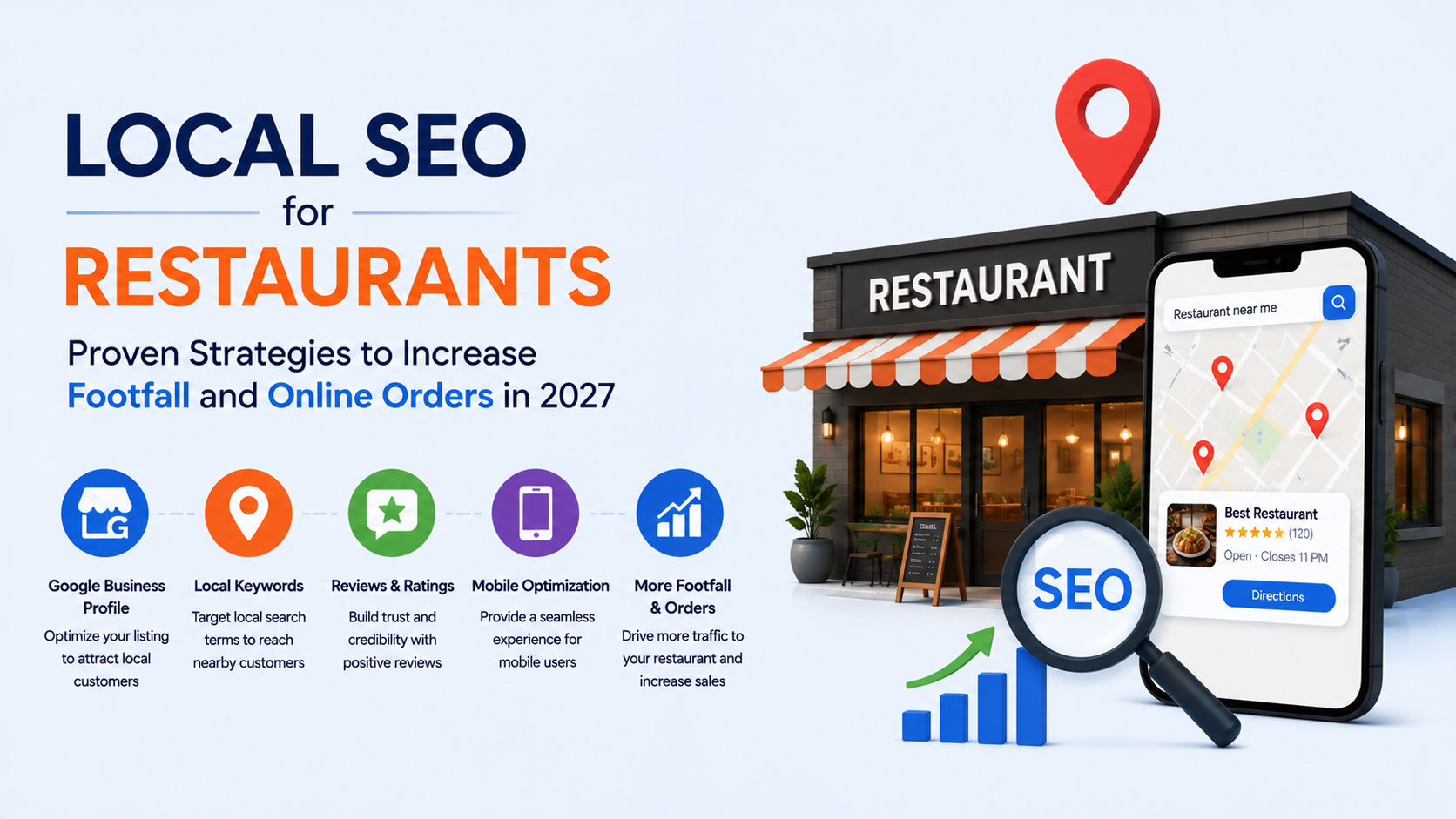
Today, most people discover restaurants through Google before deciding where to eat or place an online order. Whether they search for “best restaurant near me,” “family restaurant in Ahmedabad,” or “pizza delivery nearby,” Google displays local businesses that match their search intent. This shift in customer behavior has made local SEO for restaurants one of the most important digital marketing strategies for restaurants of every size.
Unlike traditional advertising, local SEO helps restaurants appear in front of customers who are actively looking for a place to dine or order food. By optimizing your website, Google Business Profile, local listings, and online reputation, your restaurant can attract highly qualified local customers without relying entirely on paid advertising.
A successful local SEO strategy goes beyond simply adding your restaurant’s name to Google. It includes optimizing your Google Business Profile, improving your restaurant website, targeting location-based keywords, earning positive customer reviews, building local citations, creating valuable content, running targeted Google Ads campaigns, and ensuring consistent business information across all online platforms. Together, these efforts improve your visibility in Google Search, Google Maps, local search results, and paid search results, helping you attract more local customers.
Whether you own a café, fine-dining restaurant, cloud kitchen, fast-food outlet, bakery, or multi-location restaurant chain, investing in local SEO for restaurants helps increase foot traffic, online reservations, takeaway orders, and food delivery enquiries. Combined with strong restaurant digital marketing strategies, local SEO creates a sustainable system for attracting customers and growing your restaurant business throughout 2026 and beyond
Why Local SEO Is Critical for Restaurants
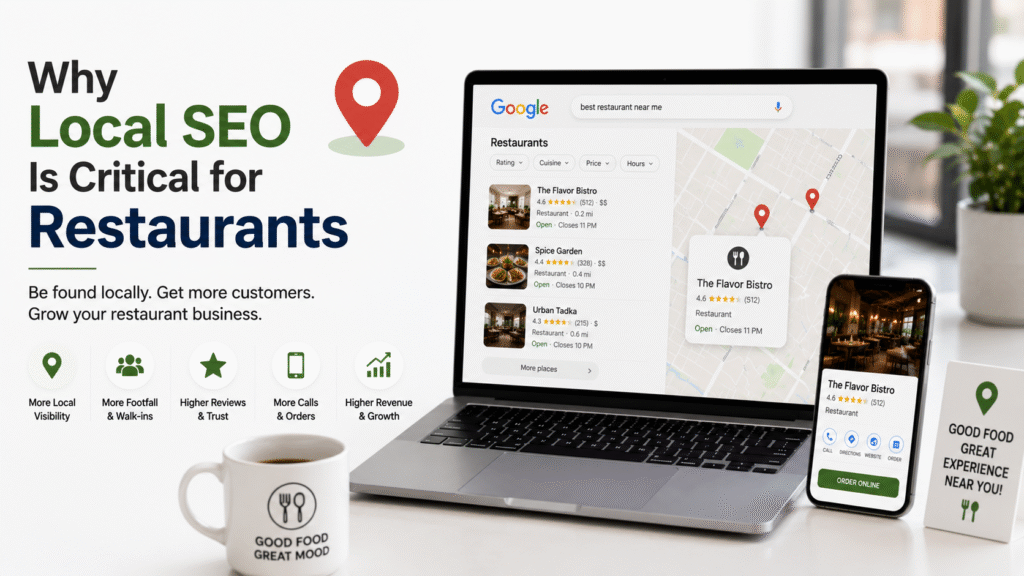
The restaurant industry has become increasingly competitive, and customer behavior has changed dramatically. Instead of driving around looking for a place to eat, most people now use smartphones to search for nearby restaurants, compare menus, read reviews, check photos, and view opening hours before making a decision. If your restaurant does not appear prominently in local search results, you risk losing potential customers to competitors who have invested in local SEO.
One of the biggest advantages of local SEO for restaurants is that it connects your business with customers who already have strong purchase intent. Someone searching for “best café near me,” “vegetarian restaurant nearby,” or “late-night food delivery” is usually ready to visit a restaurant or place an order. Appearing in these search results significantly increases your chances of converting that search into a paying customer.
Local SEO also helps build trust. Restaurants with complete Google Business Profiles, accurate contact information, high-quality food images, updated menus, and numerous positive reviews often receive more clicks than businesses with incomplete or outdated listings. Customers naturally prefer restaurants that appear professional, transparent, and highly rated.
Another major benefit is increased visibility on Google Maps. Many users rely on Google Maps to find restaurants while travelling, commuting, or exploring a new neighbourhood. Ranking in the Google Maps Local Pack can dramatically increase calls, direction requests, reservations, and walk-in traffic. This is why how to rank restaurant on Google Maps has become one of the most important goals for restaurant owners.
Unlike traditional advertising, local SEO provides long-term value. While newspaper advertisements, flyers, and radio campaigns stop producing results once the campaign ends, SEO continues attracting local customers over time. Regularly updating your website, publishing location-based content, and maintaining your online profiles strengthens your visibility and improves search rankings.
The comparison below highlights why local SEO has become a smarter investment than many traditional marketing methods.
Marketing Factor | Traditional Advertising | Local SEO for Restaurants |
Audience Targeting | Broad and general | Customers actively searching nearby |
Cost Efficiency | High recurring costs | Long-term return on investment |
Visibility | Limited campaign duration | Continuous online presence |
Customer Intent | Mixed audience | High purchase intent |
Performance Tracking | Limited | Detailed analytics available |
Trust Building | Minimal | Reviews, ratings, and business profile |
Another key advantage of local SEO is that it complements other restaurant digital marketing strategies. Customers may first discover your restaurant through Google Search, then visit your website, browse your menu, check Instagram photos, read customer reviews, and finally place an order online. Every digital touchpoint contributes to building confidence and encouraging action.
Local SEO also supports voice search, which continues to grow as more people use digital assistants. Searches like “Where’s the best Italian restaurant near me?” or “Which restaurant is open now?” are increasingly common. Optimizing your website and Google Business Profile with natural language, location-based keywords, and accurate business information improves your chances of appearing in these voice search results.
To maximise results, combine local SEO for restaurants with Google Business Profile for restaurants, restaurant SEO services, social media marketing, and a fast, mobile-friendly website. You can also strengthen your internal linking strategy with anchor texts such as “Learn More About Restaurant Website SEO,” “Explore Restaurant Digital Marketing Strategies,” or “Read Our Guide to Increasing Restaurant Online Orders.” Together, these strategies create a complete digital marketing system that helps your restaurant attract more local customers, increase revenue, and build long-term brand loyalty.
Optimizing Google Business Profile for More Visibility
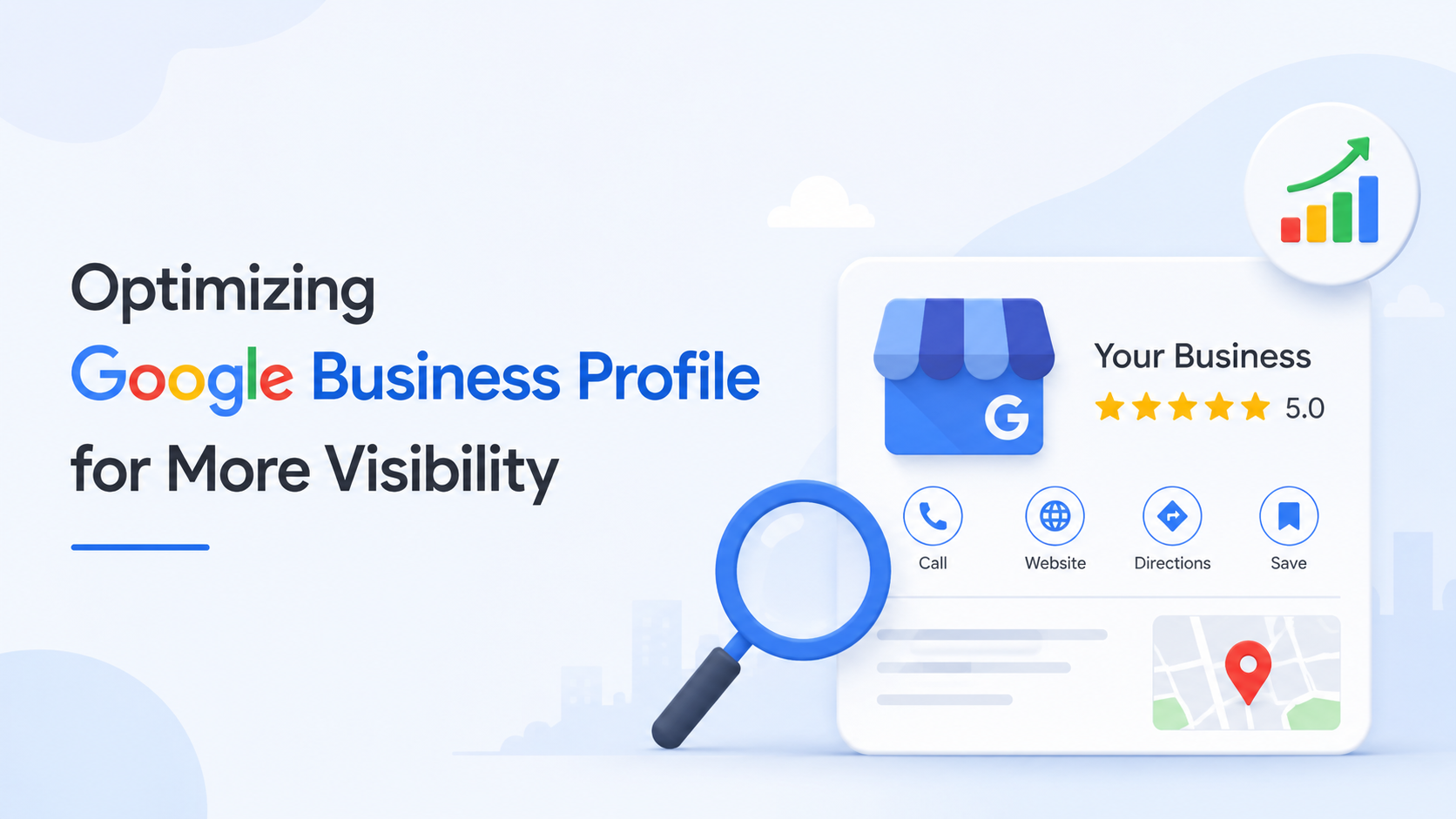
Your Google Business Profile (formerly Google My Business) is one of the most valuable tools for local SEO for restaurants. It often appears before your website in search results, making it the first impression potential customers have of your business. A complete and optimized profile can significantly improve your local rankings while encouraging more people to visit your restaurant or place an online order.
Start by claiming and verifying your business profile. Ensure your restaurant’s Name, Address, and Phone Number (NAP) are accurate and consistent across your website, social media accounts, and online directories. Inconsistent information can confuse both customers and search engines, negatively affecting your local rankings.
Select the most relevant business categories. Your primary category should accurately describe your restaurant, such as “Indian Restaurant,” “Pizza Restaurant,” “Chinese Restaurant,” or “Cafe.” You can also add secondary categories that reflect additional services like takeaway, food delivery, catering, or breakfast restaurant.
High-quality images play a major role in attracting customers. Upload professional photos of your restaurant’s interior, exterior, dining area, signature dishes, beverages, kitchen, staff, and special events. Restaurants that frequently update their photos often receive more profile views because customers enjoy seeing fresh and authentic content before deciding where to dine.
Keep your business information updated at all times. Display accurate opening hours, holiday schedules, contact details, website links, reservation options, and online ordering links. Incorrect information can lead to poor customer experiences and negative reviews.
Google Posts are another valuable feature. Use them to promote seasonal menus, special discounts, weekend events, festive offers, chef specials, or new menu launches. Regular updates signal that your restaurant is active and engaged with its audience.
The Questions & Answers section also deserves attention. Add answers to frequently asked questions such as parking availability, vegetarian options, delivery services, outdoor seating, payment methods, or reservation policies. Providing clear answers helps customers make faster decisions while improving user experience.
Below is a simple optimization checklist.
Google Business Profile Element | Why It Matters |
Accurate Business Information | Improves trust and rankings |
Business Categories | Helps Google understand your services |
Professional Photos | Attracts more customers |
Updated Business Hours | Prevents customer frustration |
Menu & Ordering Links | Increases online orders |
Google Posts | Boosts engagement and visibility |
Customer Reviews | Builds credibility |
Questions & Answers | Improves customer experience |
A fully optimized profile supports your overall restaurant SEO services strategy while increasing your chances of appearing in local search results. Combine it with restaurant local marketing strategies and a well-optimized website to maximise long-term visibility.
How to Rank Higher on Google Maps
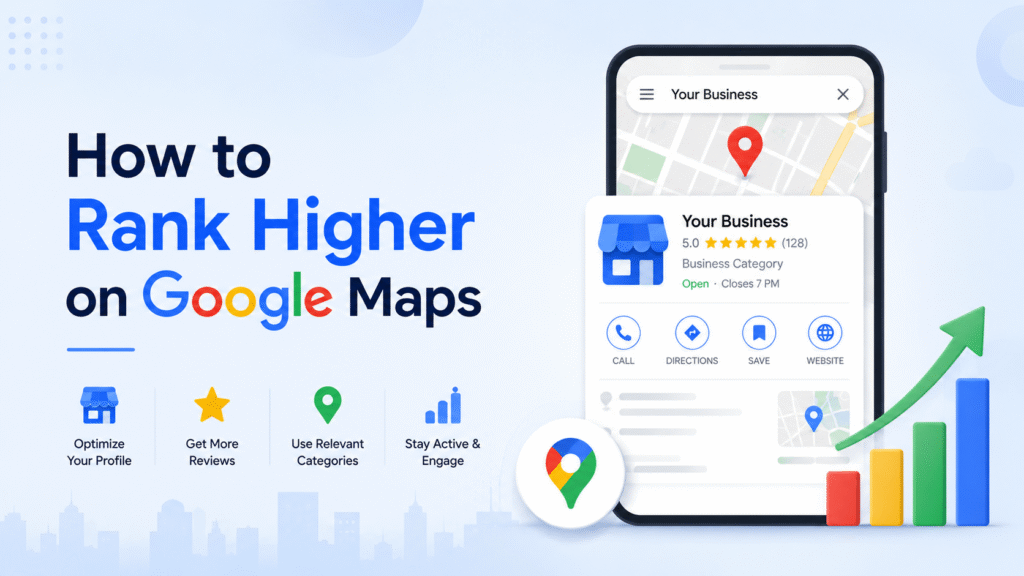
Appearing in Google’s Local Pack can significantly increase foot traffic, reservations, and food delivery orders. When customers search phrases like “restaurants near me” or “best restaurant in Ahmedabad,” Google evaluates several ranking signals before deciding which businesses to display. Understanding these signals allows restaurant owners to improve their visibility and outperform nearby competitors.
The first factor is relevance. Google wants to recommend restaurants that closely match a user’s search intent. Make sure your business description naturally includes your cuisine, services, specialties, and location. For example, if you own a family restaurant serving North Indian food, your profile should clearly communicate those details.
The second factor is distance. Google considers how close your restaurant is to the searcher’s location. While you cannot change your physical location, you can improve your relevance by optimizing your website and Google Business Profile for nearby neighbourhoods, landmarks, and service areas.
The third factor is prominence, which measures your restaurant’s online reputation. Restaurants with more positive reviews, quality backlinks, consistent business citations, active social media profiles, and strong website authority typically rank better than businesses with limited online presence.
Customer reviews are among the strongest ranking signals. Encourage satisfied diners to leave genuine Google reviews after their visit or online order. Respond politely to every review—both positive and negative—to demonstrate excellent customer service and build trust with future customers.
Your restaurant website also influences Google Maps rankings. Optimize each page using local keywords such as local SEO for restaurants, restaurant marketing ideas 2026, and SEO tips for restaurant websites. Include location-specific content, structured data (schema markup), contact information, and internal links that help search engines understand your business.
Local citations strengthen your authority as well. Ensure your restaurant is listed consistently across trusted online directories, food delivery platforms, travel websites, and local business listings. Accurate citations reinforce your business information and improve Google’s confidence in your profile.
The table below summarizes the key Google Maps ranking factors.
Google Maps Ranking Factor | Best Practice |
Google Business Profile | Complete every section |
Customer Reviews | Collect and respond regularly |
NAP Consistency | Keep business details identical everywhere |
Local Website SEO | Optimize location-specific pages |
Business Citations | List your restaurant in trusted directories |
High-Quality Images | Upload fresh food and restaurant photos |
Local Backlinks | Earn links from local websites and blogs |
Website Performance | Fast, secure, and mobile-friendly |
Ranking higher on Google Maps requires consistent effort rather than one-time optimization. Regularly update your business profile, publish fresh content, encourage customer reviews, and monitor your local search performance. Over time, these improvements help your restaurant achieve stronger visibility, attract more nearby customers, and increase both dine-in visits and online orders.
For even better results, integrate Google Maps optimization with restaurant digital marketing strategies, Google Business Profile for restaurants, and restaurant SEO services. You can also create internal links such as “Learn More About Restaurant Website SEO,” “Read Our Guide to Increasing Restaurant Online Orders,” or “Explore Local Restaurant Marketing Ideas” to strengthen your overall SEO strategy.
SEO Strategies to Increase Online Orders
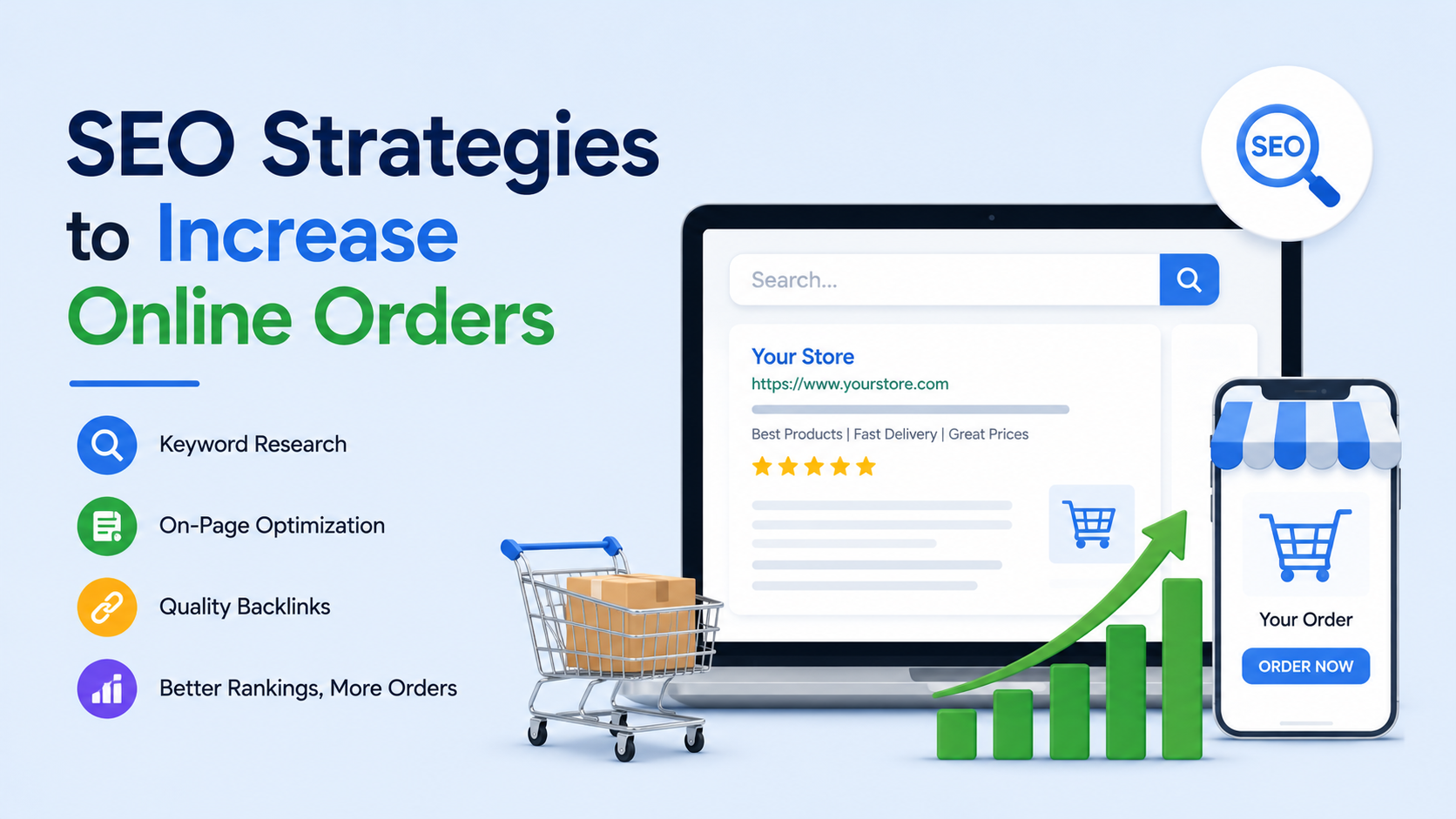
With food delivery and takeaway services becoming increasingly popular, having a search engine optimized website is essential for restaurants that want to grow online revenue. Many customers search for phrases such as “order pizza online near me,” “best biryani delivery,” or “family restaurant with home delivery.” Optimizing your website for these searches helps you reach customers who are ready to place an order.
Start by creating dedicated SEO-friendly pages for your menu categories. Instead of listing every item on a single page, organize your website into categories such as appetizers, main courses, desserts, beverages, and special offers. Add clear descriptions, high-quality food images, pricing, and internal links to improve user experience and search visibility.
Location-based optimization is equally important. If your restaurant serves multiple areas, create separate landing pages targeting each location. For example, pages optimized for “Pizza Delivery in Ahmedabad” or “Chinese Restaurant in Navrangpura” help capture highly relevant local searches and improve organic traffic.
Mobile optimization should be a priority because most customers browse restaurant websites using smartphones. Ensure your website loads quickly, displays menus clearly, and provides an easy ordering experience with minimal clicks. Slow-loading pages or complicated checkout processes often result in abandoned orders.
Schema markup also enhances visibility by providing search engines with structured information about your restaurant, including menus, opening hours, customer ratings, and pricing. Rich search results often attract higher click-through rates than standard listings.
The following table highlights effective SEO techniques for increasing online orders.
SEO Strategy | Business Benefit |
Optimize Menu Pages | Better keyword targeting |
Local Landing Pages | Higher visibility for nearby customers |
Mobile-Friendly Website | Improved user experience |
Fast Website Speed | Higher conversion rates |
Restaurant Schema Markup | Enhanced search results |
Online Ordering Integration | Simplifies customer journey |
Internal Linking | Better website navigation |
Fresh Blog Content | Increased organic traffic |
Remember that SEO works best when combined with excellent customer service, attractive food photography, and a seamless ordering process. Together, these elements encourage more visitors to complete their purchase and become repeat customers.
Local Link Building and Online Reviews for Restaurants
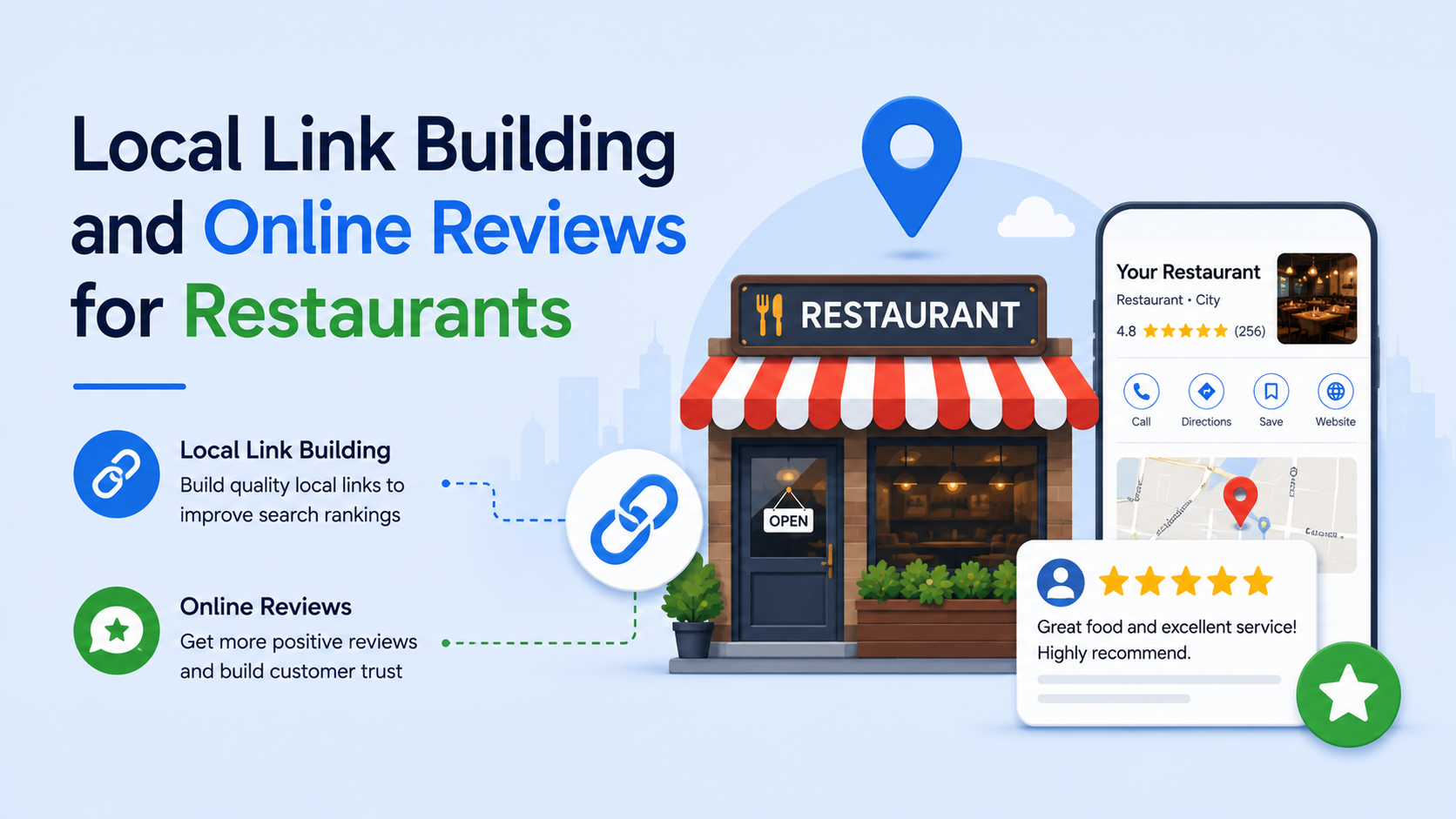
Backlinks remain one of Google’s strongest ranking signals. When trusted local websites, food bloggers, travel portals, event organizers, newspapers, or community organizations link to your restaurant’s website, search engines view your business as more authoritative. Rather than focusing on quantity, prioritize earning relevant and high-quality local links.
Participating in food festivals, sponsoring community events, collaborating with local influencers, or partnering with nearby businesses can naturally generate valuable backlinks and increase brand awareness. Local media coverage and restaurant reviews from reputable websites also strengthen your online authority.
Customer reviews are equally important. Most diners read reviews before deciding where to eat, making them one of the biggest trust factors in the restaurant industry. Encourage satisfied customers to leave reviews on Google, Facebook, and popular food delivery platforms. Positive reviews not only influence purchasing decisions but also improve your visibility in local search results.
Always respond professionally to every review, whether positive or negative. Thank customers for their feedback, address concerns respectfully, and demonstrate your commitment to providing excellent service. Active review management shows both customers and Google that your business values customer satisfaction.
User-generated content can further strengthen your local presence. Encourage customers to share photos of their meals, tag your restaurant on Instagram, or check in on Facebook. This creates authentic social proof while expanding your online reach.
Below are some effective local authority-building strategies.
Strategy | SEO Benefit |
Google Reviews | Higher local rankings |
Local Business Directories | Consistent citations |
Food Blogger Collaborations | Quality backlinks |
Local Event Sponsorships | Increased brand visibility |
Customer Photo Sharing | Strong social proof |
Community Partnerships | Improved local authority |
Media Coverage | High-quality backlinks |
Building local authority is an ongoing process. Continue earning reviews, publishing valuable content, participating in community events, and strengthening relationships with local businesses. Over time, these efforts improve your restaurant’s reputation, increase search visibility, and generate sustainable organic growth.
Conclusion
Local SEO for restaurants has become one of the most effective ways to attract nearby customers, increase online orders, and grow long-term revenue. As more people rely on Google Search and Google Maps to discover restaurants, businesses with a strong local SEO strategy gain a clear competitive advantage.
From optimizing your Google Business Profile for restaurants and improving your Google Maps rankings to implementing SEO tips for restaurant websites, creating location-focused content, and managing online reviews, every aspect of local SEO contributes to higher visibility and better customer engagement. Unlike short-term advertising campaigns, local SEO delivers lasting value by helping your restaurant appear when customers are actively searching for places to eat or order food.
The most successful restaurants combine local SEO for restaurants, restaurant digital marketing strategies, social media marketing, content marketing, and exceptional customer experiences to create a complete online growth system. By consistently optimizing your digital presence, monitoring performance, and adapting to changing customer behavior, your restaurant can generate a steady stream of qualified local traffic and loyal customers.
If you’re ready to increase foot traffic, improve online visibility, and grow your restaurant business, now is the perfect time to invest in a comprehensive local SEO for restaurants strategy. With the right approach, your restaurant can rank higher on Google, attract more local diners, increase online orders, and build a trusted brand that continues to grow well beyond 2026.
FAQ
Local SEO for restaurants is the process of optimizing your website, Google Business Profile, local listings, and online reputation to help your restaurant appear in Google Search and Google Maps when nearby customers search for places to eat or order food.
A well-optimized Google Business Profile improves your visibility in local search results, increases calls, reservations, direction requests, and online orders by providing accurate business information, photos, menus, and customer reviews
Restaurants can rank higher on Google Maps by optimizing their Google Business Profile, maintaining consistent business information, collecting positive customer reviews, improving website SEO, and building quality local citations and backlinks
SEO helps increase online orders by optimizing menu pages, targeting location-based keywords, improving mobile usability, creating local landing pages, and making the ordering process fast and user-friendly