
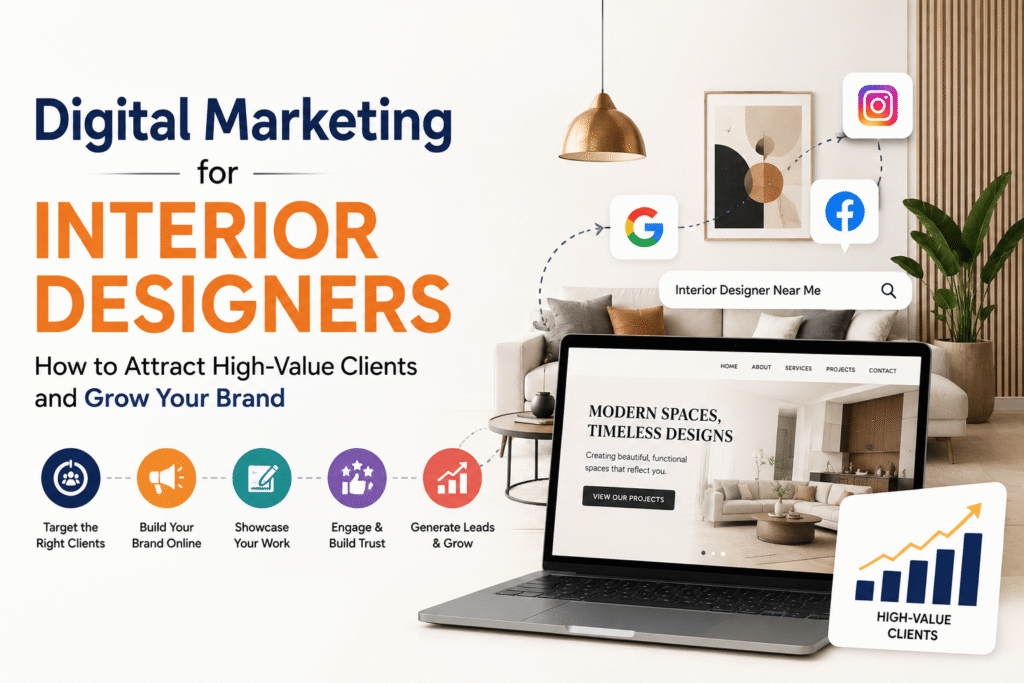
Digital Marketing for Interior Designers
Interior design is a highly visual and competitive industry where first impressions matter. While referrals and word-of-mouth marketing remain valuable, they are no longer enough to sustain consistent business growth. Today, most homeowners, property developers, and commercial clients begin their search for an interior designer online. They browse Google, Instagram, Pinterest, and design websites to compare portfolios, read reviews, and evaluate expertise before making contact. This shift in customer behaviour has made digital marketing for interior designers one of the most important investments for growing a successful design business.
An effective digital marketing strategy helps interior designers showcase their creativity, establish credibility, and generate high-quality enquiries from clients actively looking for design services. Whether you specialise in residential interiors, luxury homes, office spaces, retail outlets, or hospitality projects, having a strong online presence ensures your brand remains visible throughout the client’s decision-making journey.
However, successful digital marketing for interior designers is much more than posting beautiful project photos on social media. It combines search engine optimization (SEO), content marketing, social media marketing, paid advertising, local SEO, email marketing, and website optimization into one integrated strategy. Together, these channels help attract the right audience, nurture trust, and convert visitors into paying clients.
As competition continues to grow, businesses that invest in professional digital marketing gain a significant advantage over those relying only on traditional advertising. From ranking higher on Google to generating consistent enquiries through social media, digital marketing enables interior designers to build authority, reach their ideal clients, and achieve sustainable business growth
Why Digital Marketing Is Essential for Interior Designers
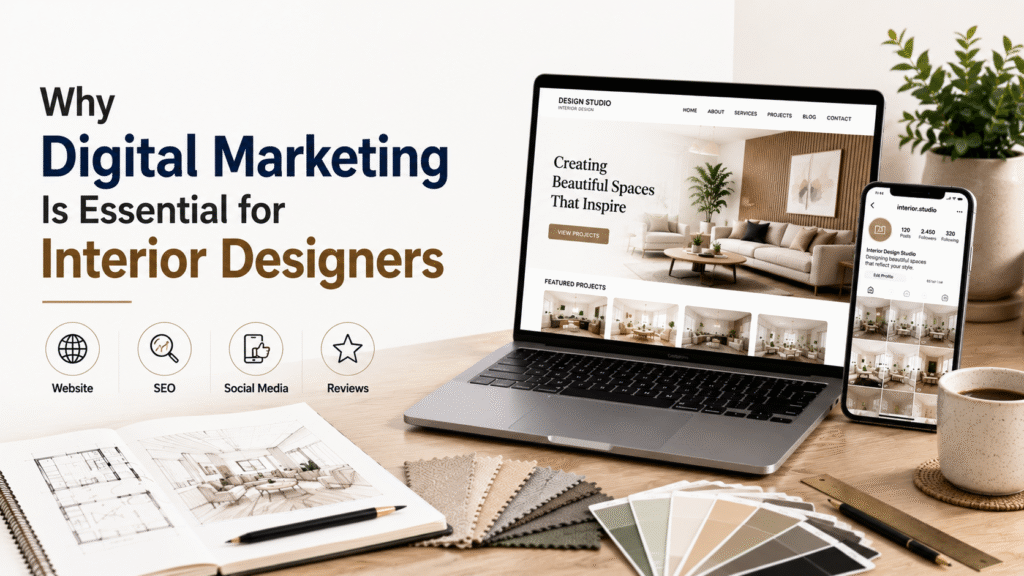
The way people hire interior designers has changed dramatically over the past decade. Instead of relying solely on referrals or newspaper advertisements, clients now research extensively online before contacting a designer. They compare portfolios, browse social media profiles, read Google reviews, and visit multiple websites before deciding whom to trust with their project. If your business isn’t visible during this research process, you’re likely losing valuable opportunities to competitors with stronger digital marketing strategies.
One of the biggest advantages of digital marketing for interior designers is its ability to showcase your expertise 24/7. Your website, Instagram profile, Pinterest boards, blog articles, and Google Business Profile work together to present your design style, completed projects, client testimonials, and industry knowledge—even while you’re meeting clients or managing ongoing projects.
A professionally managed online presence also helps build trust before the first conversation. High-quality project photography, detailed case studies, positive customer reviews, and educational content reassure potential clients that they are choosing an experienced professional. Trust is especially important in the interior design industry because clients are investing significant time and money into transforming their homes or commercial spaces.
Digital marketing also allows interior designers to target specific audiences more effectively than traditional advertising. Using tools like Google Ads and Meta Ads, you can reach homeowners planning renovations, newly married couples furnishing a new house, real estate investors, architects, builders, and business owners looking to redesign their offices. This targeted approach improves lead quality while making better use of your marketing budget.
Local visibility is another major benefit. Most interior designers serve clients within a particular city or region. By implementing local SEO for interior designers, optimizing your Google Business Profile, and creating location-specific landing pages, you can appear in Google searches such as “interior designer near me” or “best interior designer in Ahmedabad.” These local searches often have strong purchase intent, making them an excellent source of qualified enquiries.
Digital marketing also provides measurable results. Unlike traditional marketing methods where success is difficult to track, digital platforms allow you to monitor website traffic, keyword rankings, enquiry forms, phone calls, advertising performance, and conversion rates. These insights help you understand which marketing strategies for interior design business are delivering the highest return on investment and where improvements can be made.
The comparison below highlights why digital marketing has become a preferred choice for modern interior design businesses.
Marketing Factor | Traditional Marketing | Digital Marketing |
Audience Targeting | Broad and less specific | Highly targeted by location, interests, and demographics |
Cost Efficiency | Often expensive | Flexible for businesses of all sizes |
Performance Tracking | Limited | Real-time analytics and measurable ROI |
Brand Visibility | Short-term | Continuous online presence |
Lead Generation | Moderate | Consistent and scalable |
Customer Engagement | One-way communication | Interactive through websites and social media |
Another significant advantage is content marketing. Publishing blogs about home renovation trends, space-saving ideas, colour psychology, modular kitchens, luxury living room designs, or sustainable interiors positions your business as an industry expert. Educational content not only attracts organic traffic through SEO for interior designers but also builds authority and trust with potential clients.
For example, a homeowner searching for “best living room lighting ideas” may discover your blog, explore your portfolio, and eventually enquire about your interior design services. This demonstrates how valuable content supports every stage of the customer journey—from awareness to conversion.
To maximise results, combine your digital marketing efforts with interior design website marketing, search engine optimization, and social media marketing for interior designers. You can also strengthen your online presence by creating detailed project case studies, publishing customer testimonials, and regularly updating your Google Business Profile. Together, these strategies create a sustainable marketing system that consistently attracts high-value clients and helps your interior design business stand out in an increasingly competitive market.
SEO Strategies to Rank Higher on Google
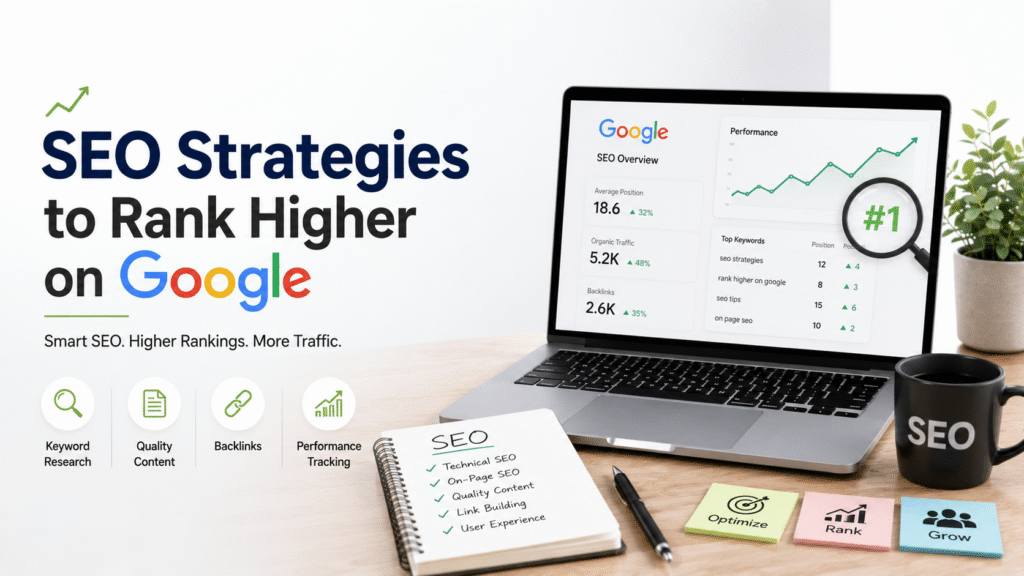
When someone searches for terms like “best interior designer near me,” “luxury home interior designer,” or “office interior designer in Ahmedabad,” Google displays businesses it considers the most relevant and trustworthy. If your website is optimized correctly, you have a greater chance of appearing on the first page, where most users click. Ranking well means your business gets discovered by people who already have an interest in hiring an interior designer, making SEO one of the highest-return digital marketing investments.
The first step in successful SEO for interior designers is keyword research. Instead of targeting only broad keywords like “interior designer,” focus on long-tail search terms that reflect user intent. Examples include “modern apartment interior designer in Ahmedabad,” “commercial office interior design services,” or “modular kitchen designer near me.” These keywords generally face less competition while attracting highly relevant visitors.
On-page SEO is equally important. Every service page should include a clear title tag, compelling meta description, optimized headings, descriptive image alt text, and naturally placed keywords. Since interior design is a visual business, image optimization plays a major role. Compress high-resolution project images to improve page speed while using descriptive filenames such as luxury-living-room-design-ahmedabad.jpg instead of generic names.
Creating valuable content is another essential ranking factor. Publishing informative blog articles on topics like home renovation tips, interior design trends, colour combinations, lighting ideas, and space-saving solutions helps attract visitors through informational searches. This content also demonstrates expertise, supporting Google’s EEAT principles while building trust with potential clients.
Local SEO should be a priority because most interior designers serve a specific geographic area. Optimise your Google Business Profile with accurate business information, service categories, operating hours, project photos, and client reviews. Encourage satisfied customers to leave detailed reviews mentioning your services and location. Positive reviews not only improve credibility but can also increase visibility in Google’s Local Pack.
Website performance also influences rankings. Ensure your website loads quickly, works seamlessly on mobile devices, and provides a simple navigation structure. Since many users browse design inspiration on their smartphones, a mobile-friendly website significantly improves user experience and reduces bounce rates.
Internal linking is another often-overlooked SEO strategy. Link related pages using descriptive anchor text such as “Learn more about Modular Kitchen Design Services,” “Explore Luxury Bedroom Interior Projects,” or “Read our Home Renovation Guide.” These links help users discover more content while improving website structure for search engines.
Below is a comparison of major SEO activities and their benefits.
SEO Activity | Primary Benefit |
Keyword Research | Attracts qualified visitors |
On-Page SEO | Improves search visibility |
Local SEO | Generates nearby enquiries |
Content Marketing | Builds authority and trust |
Image Optimization | Improves page speed and rankings |
Internal Linking | Enhances user experience and indexing |
Google Business Profile | Increases local visibility |
SEO is not an overnight strategy. It requires consistency, quality content, and regular optimisation. However, businesses that invest in SEO often enjoy sustainable traffic, stronger brand authority, and lower customer acquisition costs compared to relying solely on paid advertising.
Social Media Platforms That Generate High-Value Leads
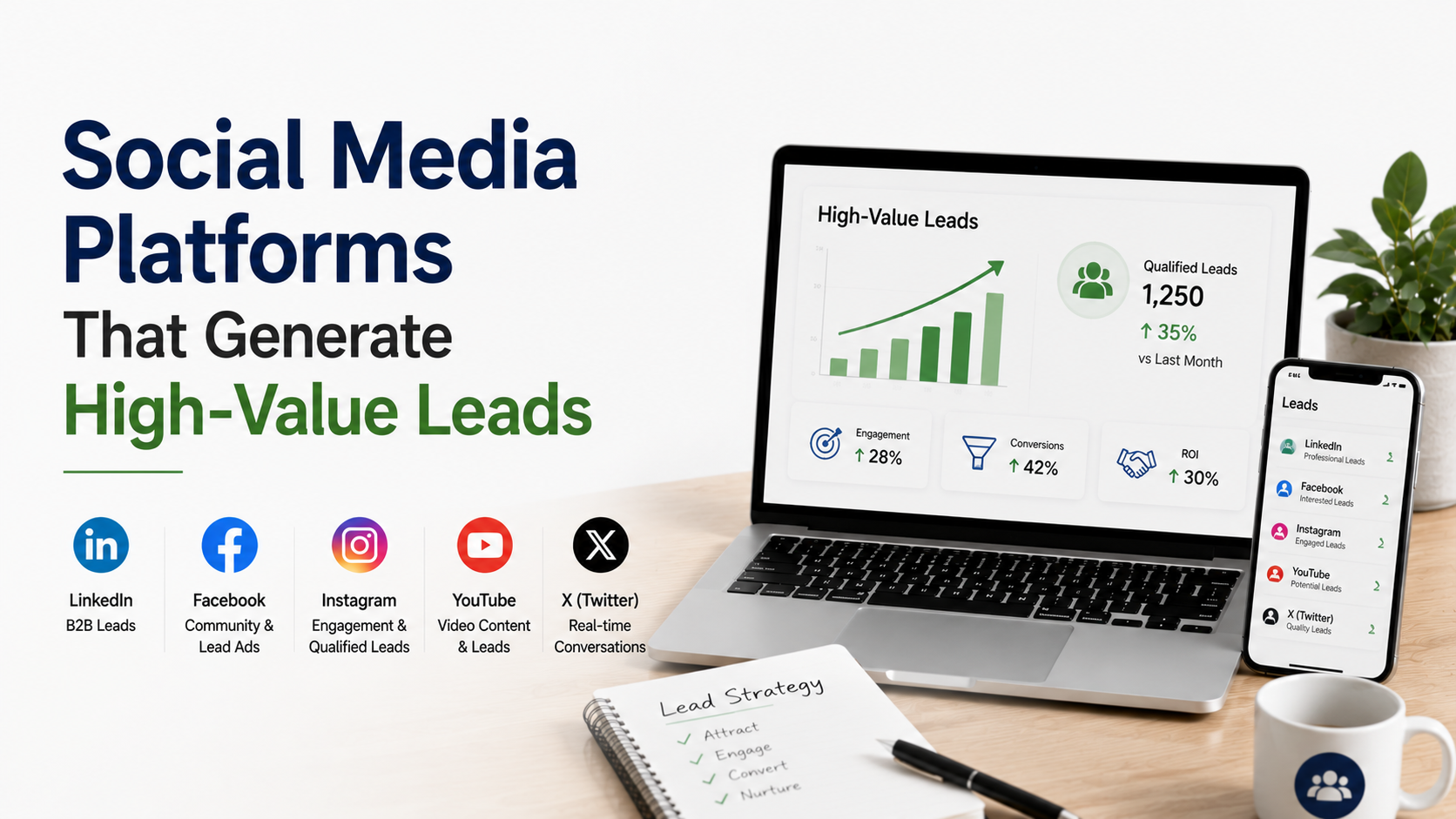
Interior design is naturally visual, making social media one of the most powerful marketing channels available. Potential clients often decide whether to contact a designer based on the quality of their online portfolio and the consistency of their content. Rather than using every platform equally, focus on those where your target audience spends the most time.
Instagram remains one of the most effective platforms for interior designers. High-quality project photos, before-and-after transformations, behind-the-scenes videos, styling tips, and short Reels showcasing completed spaces can significantly increase reach and engagement. Features like Stories, Highlights, and Guides also help organise your work while keeping your audience informed about ongoing projects.
Pinterest functions as a visual search engine where users actively look for home décor inspiration, furniture ideas, colour palettes, modular kitchens, and bedroom designs. By creating keyword-rich boards and linking pins back to your website, you can generate long-term traffic from users planning future renovation projects.
Facebook is particularly valuable for building local communities. Sharing completed projects, client testimonials, design blogs, live sessions, and educational posts helps establish trust while keeping your audience engaged. Running targeted Google Ads for interior designers alongside Facebook and Instagram advertising can further increase visibility and lead generation.
LinkedIn should not be overlooked, especially for designers focusing on commercial interiors. Office owners, architects, builders, hotel managers, and real estate developers regularly use LinkedIn to find professional service providers. Sharing project case studies, industry insights, and commercial design trends helps position your business as a trusted expert in the B2B market.
YouTube offers another opportunity to build authority through educational videos. Content such as home makeover walkthroughs, renovation advice, furniture selection tips, lighting guides, and frequently asked design questions performs well over time because people continuously search for these topics. Video content also improves trust by allowing potential clients to understand your design philosophy and communication style.
Consistency is the key to successful social media marketing for interior designers. Instead of posting randomly, create a monthly content calendar that balances educational, inspirational, and promotional content.
Platform | Best Use |
Project showcases, Reels, Stories, before-and-after transformations | |
Design inspiration and website traffic | |
Community engagement and local advertising | |
Commercial projects and professional networking | |
YouTube | Educational videos and long-term authority building |
Responding quickly to comments and direct messages also improves trust and increases conversion opportunities. Many enquiries are lost simply because businesses take too long to respond. Use clear calls to action such as “Book a Free Design Consultation,” “View Our Latest Projects,” or “Request a Custom Quote” to guide visitors toward the next step.
To maximise results, combine social media marketing for interior designers with interior design website marketing, SEO, email marketing, and lead nurturing. This integrated strategy creates multiple touchpoints throughout the customer journey, increasing brand visibility, strengthening credibility, and generating a steady stream of high-value interior design enquiries.
Building a Portfolio That Converts Visitors into Clients
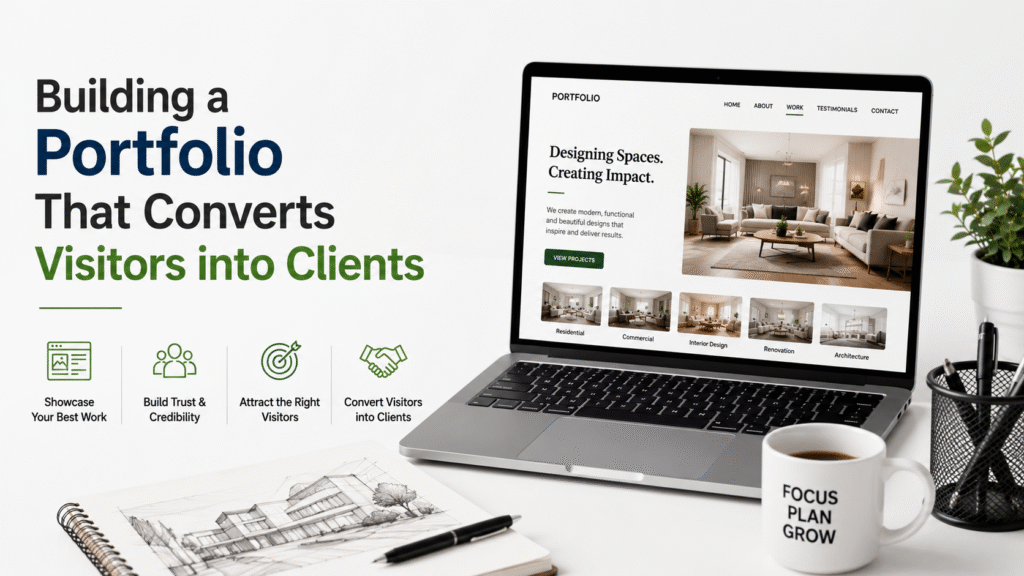
Your portfolio is often the first impression potential clients have of your business. While beautiful photographs attract attention, visitors also want to understand your design process, problem-solving abilities, and the value you bring to every project. Instead of uploading only finished images, create detailed case studies that explain the client’s requirements, design challenges, planning process, material selection, budget considerations, and final outcome. This approach helps visitors appreciate the expertise behind your work rather than judging it solely on appearance.
Organize your portfolio into categories such as residential interiors, luxury homes, apartments, villas, office interiors, retail spaces, restaurants, and hospitality projects. A clear structure makes it easier for visitors to find projects similar to what they are planning. Each project should include high-resolution images, a short project description, client goals, completion timeline, and the design style used. Adding before-and-after photographs can further demonstrate the transformation and increase engagement.
Professional photography is another essential investment. Poor-quality images can reduce the perceived value of even the most impressive projects. Use proper lighting, multiple room angles, and detail shots that highlight textures, furniture, lighting, and décor elements. Optimizing these images also supports interior design website marketing by improving page speed and user experience.
Trust signals should be integrated throughout your portfolio. Display verified client testimonials, Google reviews, certifications, industry awards, media features, and partnerships with architects or builders. These elements reinforce your credibility and reassure visitors that they are choosing a reliable professional.
Every portfolio page should include a strong call-to-action. After showcasing your work, encourage visitors to take the next step with messages such as “Book a Free Design Consultation,” “Request a Personalized Quote,” or “Schedule Your Site Visit.” Reducing friction between inspiration and enquiry significantly improves conversion rates.
The table below highlights the key elements of a high-performing portfolio.
Portfolio Element | Why It Matters |
Professional Project Photos | Creates a strong first impression |
Project Case Studies | Demonstrates expertise and problem-solving |
Before-and-After Images | Highlights transformation |
Client Testimonials | Builds trust and credibility |
Service Categories | Improves navigation and user experience |
Strong CTA | Encourages enquiries and consultations |
Mobile-Friendly Design | Improves accessibility and engagement |
A portfolio should evolve as your business grows. Regularly update it with your latest projects, design trends, and client success stories. Combining an optimized portfolio with SEO for interior designers, social media, and content marketing creates a complete digital ecosystem that consistently attracts and converts qualified visitors.
Lead Generation Strategies for Interior Design Businesses
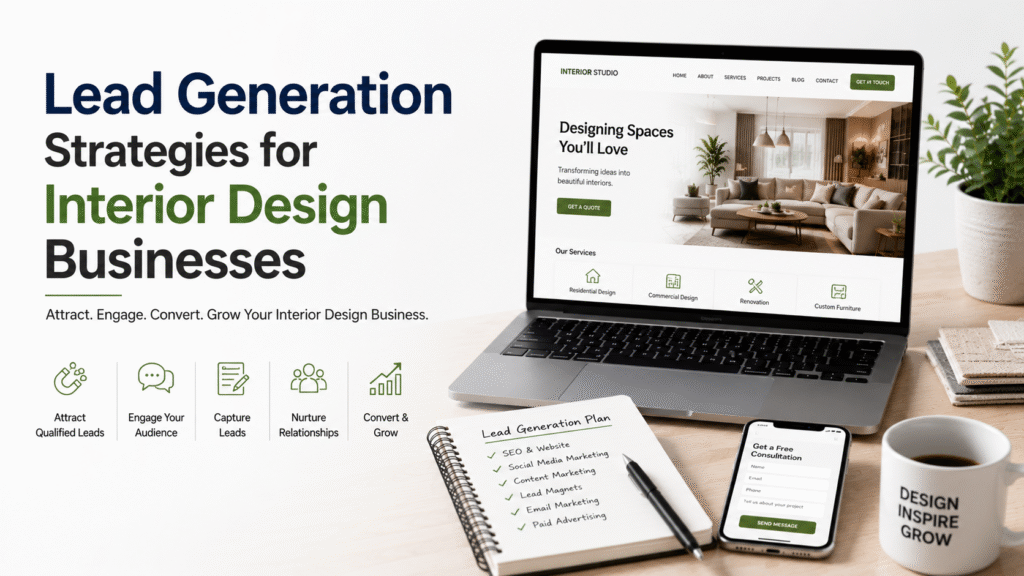
Generating leads consistently is one of the biggest challenges for interior designers. Waiting only for referrals or repeat business often leads to inconsistent project pipelines. A diversified lead generation strategy ensures your business continues attracting potential clients throughout the year.
One of the most effective methods is combining local SEO for interior designers with a well-optimized Google Business Profile. Many homeowners search for services using location-based queries such as “interior designer near me” or “best interior designer in Ahmedabad.” Appearing in Google’s local results increases visibility among users who are actively looking to hire a designer.
Paid advertising can further accelerate lead generation. Google Ads for interior designers allow you to target high-intent keywords that indicate a strong likelihood of conversion. At the same time, Meta Ads on Facebook and Instagram help you showcase completed projects, promote free consultations, and retarget users who have already visited your website.
Offering valuable downloadable resources is another proven strategy. Free home design guides, renovation checklists, space-planning tips, colour selection ebooks, or budgeting templates encourage visitors to share their contact details. Once they become part of your email list, you can nurture these prospects through newsletters, project updates, seasonal design inspiration, and exclusive offers until they are ready to begin their project.
Referral marketing should also be part of your strategy. Encourage satisfied clients, architects, builders, and real estate professionals to recommend your services. Strong partnerships often generate high-quality leads because they come with built-in trust and credibility.
The quality of your website also influences lead generation. Ensure your contact forms are simple, your phone number is clearly visible, and your consultation booking process is quick and user-friendly. Slow websites or complicated enquiry forms often discourage potential clients from reaching out.
Below is a comparison of effective lead generation channels.
Lead Generation Channel | Primary Benefit |
SEO | Long-term organic enquiries |
Google Ads | High-intent leads |
Social Media Marketing | Brand awareness and engagement |
Google Business Profile | Local visibility |
Email Marketing | Lead nurturing and repeat business |
Referral Marketing | High-converting qualified leads |
Content Marketing | Builds authority and trust |
The most successful marketing strategies for interior design business combine these channels rather than relying on only one. By continuously optimizing your website, publishing valuable content, engaging on social media, and tracking campaign performance, you can build a reliable lead generation system that supports long-term business growth.
Conclusion
Digital marketing for interior designers is no longer optional—it is a fundamental part of building a successful and sustainable interior design business. As more homeowners and commercial clients begin their search online, having a strong digital presence helps your brand stay visible, build credibility, and generate consistent enquiries.
From implementing SEO for interior designers and creating engaging social media content to developing a portfolio that inspires confidence and using effective lead generation for interior designers, every marketing activity plays a role in attracting the right clients. Businesses that consistently invest in content, local SEO, website optimization, and targeted advertising are better positioned to outperform competitors and establish long-term authority in the industry.
Success does not come from using a single marketing channel. Instead, it comes from integrating digital marketing for interior designers into every stage of the customer journey—from discovery and research to enquiry and project completion. By delivering valuable content, showcasing authentic project results, maintaining a professional online presence, and continuously refining your strategy based on data, you can build lasting client relationships and create a predictable pipeline of high-value projects.
If you’re ready to grow your interior design business, now is the perfect time to implement these proven digital marketing strategies. A well-planned online marketing approach will help you attract more qualified clients, strengthen your brand reputation, and achieve sustainable business growth in an increasingly competitive marketplace.
FAQ
Digital marketing helps interior designers increase online visibility, attract qualified clients, build trust, and generate consistent enquiries through SEO, social media, content marketing, and paid advertising.
SEO helps interior designers rank higher on Google for relevant search terms, attract organic traffic, improve local visibility, and generate high-quality leads from people actively searching for interior design services.
Instagram, Pinterest, Facebook, LinkedIn, and YouTube are the most effective platforms for interior designers. They help showcase portfolios, engage potential clients, build authority, and generate high-value enquiries through visual content and educational posts
The most effective lead generation strategies include SEO, Google Business Profile optimization, Google Ads, social media marketing, content marketing, email marketing, and referral programs. Combining these channels creates a steady flow of qualified leads and supports long-term business growth.